24 Out of 25 Change Agents Chose Not to Change
I shared an AI meeting tool with 25 Scrum Masters. Three responded. One tried it. The data on practitioner resistance is worse than you think.
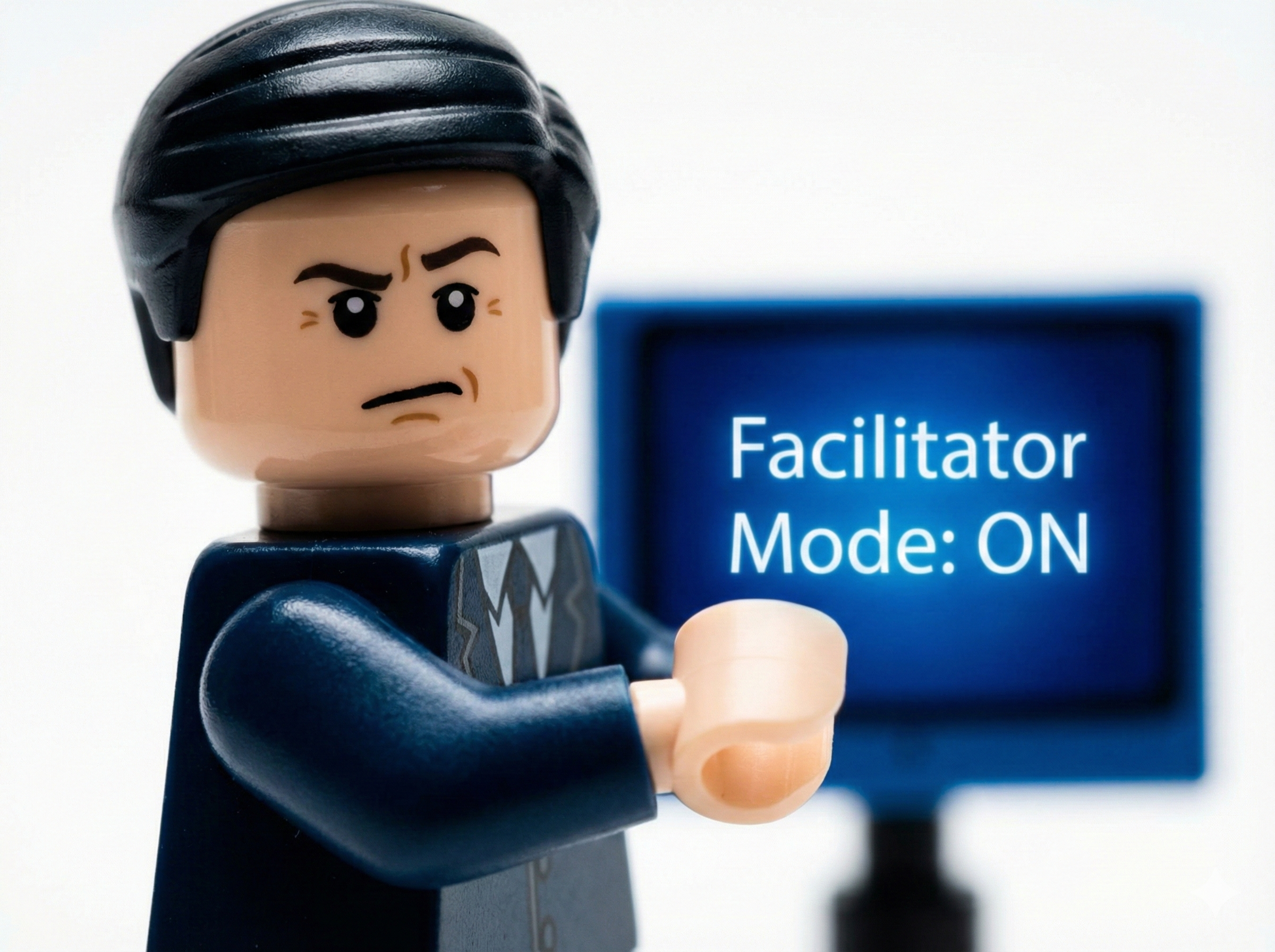
Last week I was editing a meeting invite in Outlook when I noticed something I'd never seen before. A small line of text: "Facilitator Mode: Off (click to turn on)."
I clicked it. Why not.
The meeting kicked off with an agenda bar at the top of the Teams call. A timer tracked how far along we were. Halfway through, a nudge popped into the chat: "You're about halfway through your allotted time." The AI was capturing notes, action items, decisions - live, without anyone asking it to.
When the call ended, a full recap dropped into the channel. Notes. Action items. Key decisions. All organized, all accurate (mostly - it confused my name for my manager's once, but nobody's perfect), all done automatically.
I was blown away. After the call, I actually typed into the chat: "Hey Facilitator, are you trying to take my job?" Joking, obviously. Mostly.
The 4% Problem
So I did what any excited practitioner would do. I went to the Scrum Master community I work with - 25 people whose entire job description includes the words "continuous improvement" - and I shared everything. Screenshots, insights, the whole breakdown.
Three people responded. Out of 25.
One said they liked the timer. One said they hadn't tried it. One said they didn't like it.
That's it.
I kept using it all week. Watched it get better at capturing the right action items. My meeting notes went from "stuff I scribbled while half-listening" to structured summaries I could actually send to stakeholders. So I went back to the group. Told them I was turning Facilitator Mode on for all my Scrum events. Reminded them of something I believe deeply:
This tool will never be worse than it is today.
Just like every AI tool. Just like every piece of technology you've ever adopted. The worst version is the one that exists right now, and it's already pretty good.
The response? Silence.
One person - one out of 25 - sent me a private message: "Hey, how do I turn this on?"
One. Person. Four percent.
The Hypocrisy Nobody Wants to Talk About
I need to name this because nobody else will.
We are Scrum Masters. We coach teams through change. We run retrospectives about improving. We tell developers to experiment. We preach empiricism - try something, inspect the result, adapt.
And when a tool shows up that automates the meeting grunt work we've been complaining about for years? 96% of us won't even try it.
Stefan Wolpers surveyed 289 agile practitioners for the AI4Agile Practitioners Report this year. The headline? 83% say they use AI tools. Sounds great, right?
Keep reading.
55% spend 10% or less of their work time with AI. Only 9% exceed a quarter of their time. That's not adoption. That's dabbling. The professional equivalent of downloading a gym app and never opening it.
I recognize that behavior. I've been that person. Years ago, my organization rolled out Power BI dashboards and I kept pulling my Sprint data into Excel for months because "my spreadsheet works fine." It wasn't until a stakeholder asked why my reports looked different from everyone else's that I finally switched. So I know how this feels from the inside.
The difference is: I eventually switched.
Only 1% - one percent - consider AI irrelevant to their role. Ninety-nine percent know it matters. They just aren't doing anything about it.
That's not ignorance. That's paralysis.
PMI tells the same story from a different angle: only 21% of project professionals use AI "always or often" in their work, but 82% of senior leaders expect AI to transform project management within five years. Nearly 80% of practitioners aren't even using the training already available to them. The resources exist. The tools exist. The gap between expectation and action? Alarming.
It's Not About the Tool
This isn't about Microsoft Teams Facilitator Mode. That's just the story. The thing that made the pattern visible.
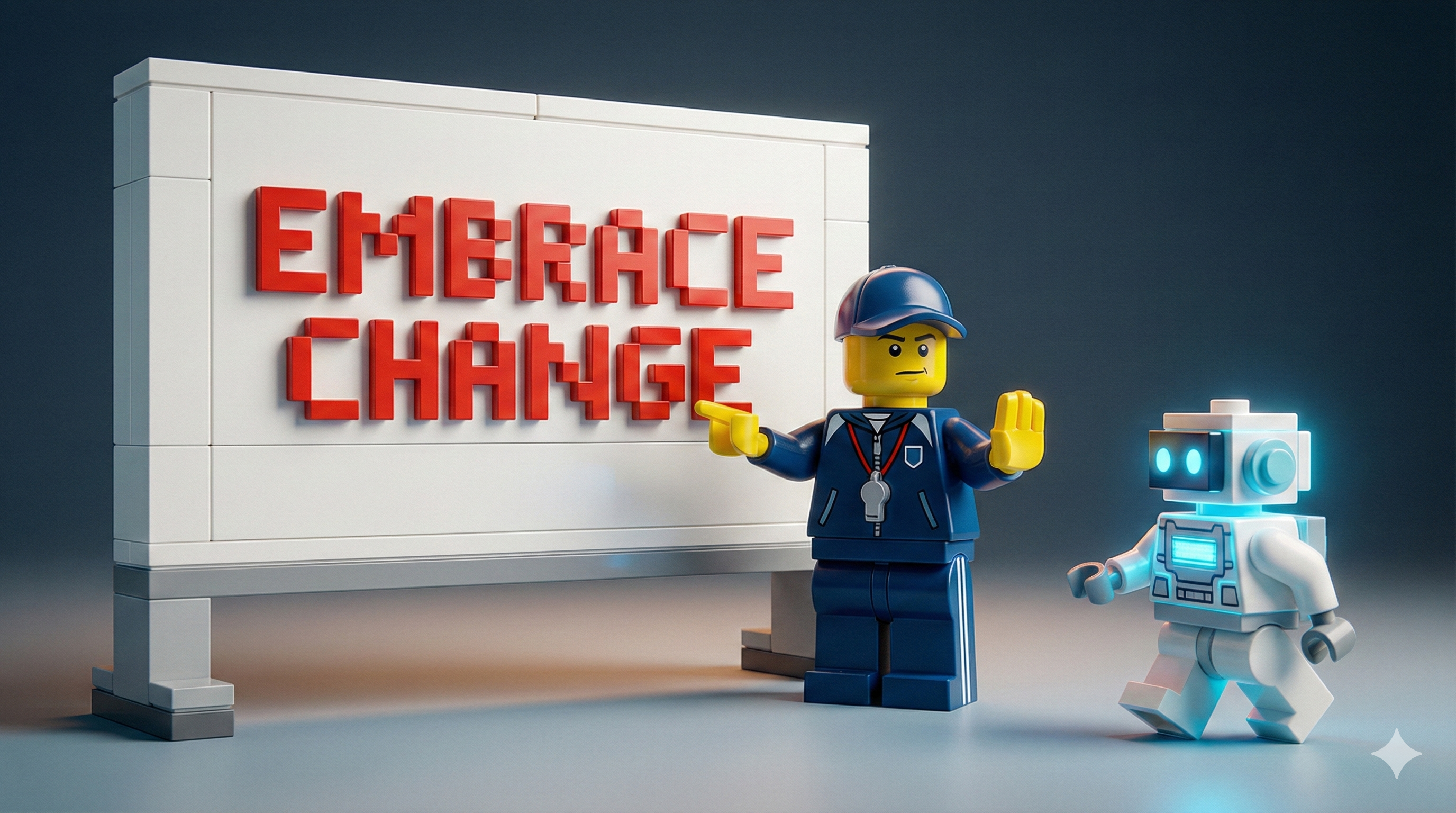
The pattern is this: the people paid to help organizations adapt are the last ones willing to adapt themselves.
Wolpers found that 54.3% of practitioners say integration uncertainty is their biggest challenge - not resistance, not tool availability, but "I don't know how this fits into my workflow." Y'all, that's our literal job. We coach teams through uncertainty every sprint. Try, inspect, adapt. But when it's our own workflow? We freeze.
I've seen this movie before. Teams resisted moving from physical boards to digital tools. Before that, it was transitioning from waterfall to Agile itself. Every time, the loudest objection sounds exactly the same: "But the way we do it now works fine."
It does. Until it doesn't. Until someone at the leadership table starts asking why they need five Scrum Masters when an AI can run a standup, capture notes, track action items, and generate a sprint review summary.
Bob Galen, who literally wrote Extraordinarily Badass Agile Coaching, has been saying this at conferences: AI is a tool for tactical guidance within agile frameworks. It's not replacing the human stuff. The coaching. The empathy. The ability to read a room and know that the team lead hasn't said a word in three sprints and that silence means something.
But you can't read the room while you're taking notes. You can't watch body language while tracking who committed to what.
You can't do the human work if you're buried in the clerical work.
FOBO Is Real. And It's a Choice.
There's a term floating around the agile community: FOBO. Fear of Becoming Obsolete.
I get it. The job market for agile roles has tightened. Layoffs have hit. Feeling threatened by a tool that can do pieces of your job is natural. But watching teams resist change for a decade taught me something: the people who cling to the old way don't avoid obsolescence. They accelerate it.
Practitioners don't actually fear AI replacing them. The Wolpers data shows it: on a 7-point threat scale, the average was 2.75. Firmly in the "opportunity" camp. Over half scored 1 or 2. They're not scared. They're not threatened. They just won't learn it.
Only 15% have received formal AI training in agile contexts. Fifteen percent. Despite 85% of organizations providing some form of AI support. The tools are there. The access is there. The training budgets exist. Nobody's using them.
My friend Marco Braun wrote about this - he stopped waiting for a formal training plan and just started building. That's the move. You don't need your organization to hand you a curriculum. You need to open the tool and click the button.
The Scrum Master who refuses to learn AI tools in 2026 is making the same choice as the project manager who refused to learn Agile in 2012. Both end up wondering why nobody needs them anymore.
The One Who Replied
I keep thinking about that one colleague. The one who sent me a DM. "Hey, how do I turn this on?"
They didn't need a business case. They didn't need a committee to approve it. They didn't need a training course or a change management workshop. They saw something new, asked how to use it, and started.
They turned it on for their next Sprint Review. Told me afterward that the recap caught an action item they would have missed - a stakeholder had casually mentioned a compliance deadline, and the AI flagged it as a decision. They didn't have to change how they ran the meeting. They just had a better record of what happened in it.
That's empiricism. Inspect and adapt. The thing we tell our teams to do every sprint.
They're going to be fine.
Your Monday Dare

Open your next meeting invite. Find the Facilitator button (or whatever AI meeting tool your organization provides - Otter.ai, Fireflies, Google Meet notes, pick one). Turn it on. Don't ask permission. Don't wait for consensus.
Just try it. Watch what happens. Decide if the notes are good enough. Then decide if you want to keep scribbling yours by hand while the AI gets better every week.
Because here's the part that keeps me up at night. It's not that 24 out of 25 Scrum Masters ignored a new tool.
It's that 24 out of 25 change agents chose not to change.
Your move.
Continue Your Journey
The Agile Second Brain: The AI operating system I use to capture, organize, and act on everything I learn. If you're tired of losing insights across Slack, email, and notebooks, this is where to start.
AI Development for Non-Technical Builders: Learn to build AI-powered tools and workflows without writing traditional code. If you liked hearing about Facilitator Mode, wait until you see what you can build yourself.