Confessions of a Facilitator: When the Tech Knew My Role Better Than I Did
The hardest part of running a great meeting isn't logistics - it's keeping your ego in check
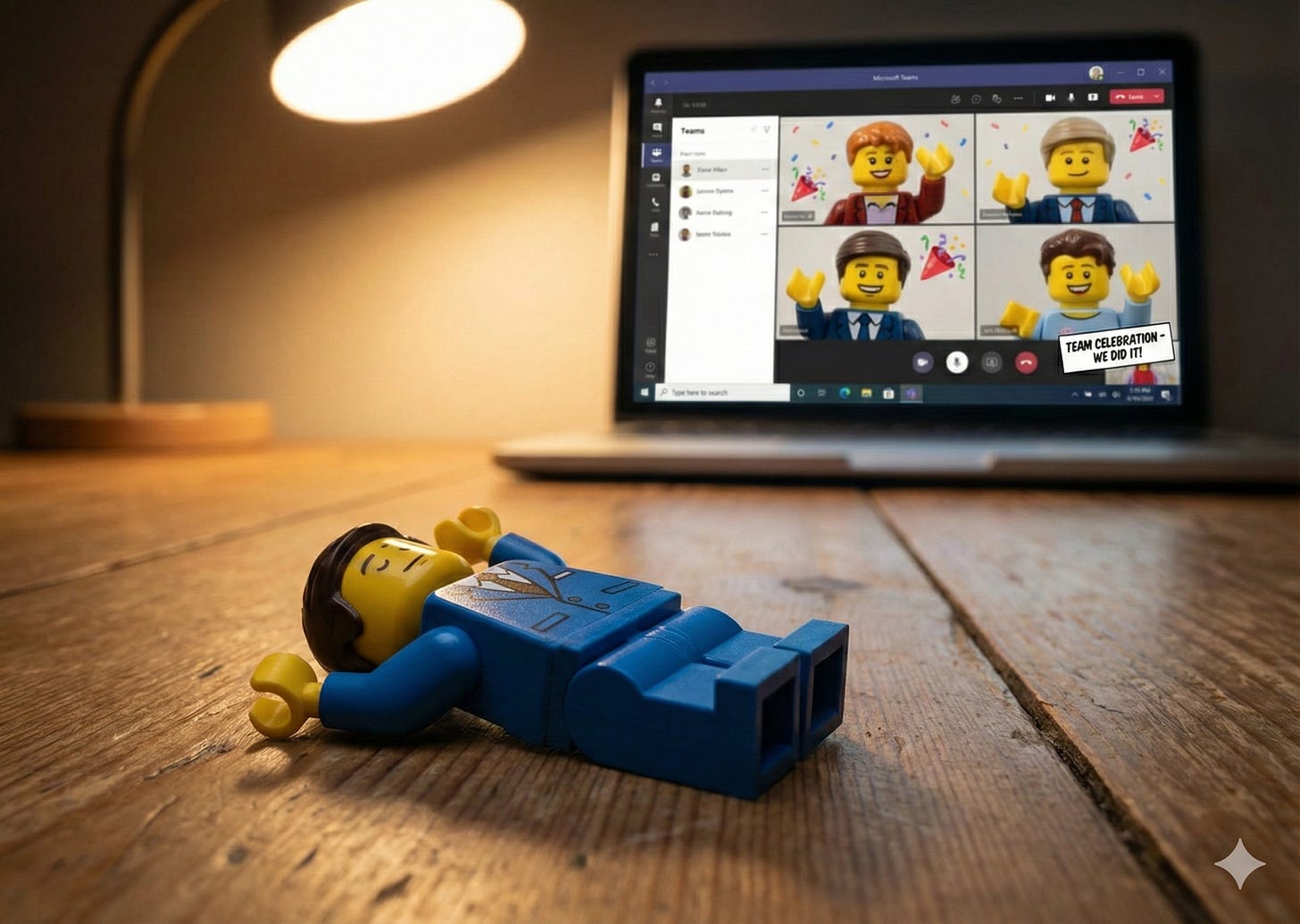
I collapsed on the floor after the meeting.
Not from failure - from fighting my own instincts for three hours. The workshop went well. Eleven distinct action items, more than any previous session with this group, plus insights I never would have reached alone. And the only reason it worked? Microsoft Teams literally wouldn't let me participate.
The Facilitator's Paradox
The uncomfortable truth about facilitation: people good enough to design great sessions are exactly the ones who struggle not to hijack them.
I'd done the pre-work. Built the Miro board. Structured the conversation. Planned the breaks. I wasn't leading this group - just the dude who'd pitched the workshop idea for a major initiative. By the time we started, I had opinions. Strong ones. Hours of thinking through this problem - surely my perspective had value?
Amy Edmondson's research at Harvard has a name for what I was about to do: unintentionally silencing the room.
When leaders speak first - or when the architect starts contributing ideas - team members hold back. Not because they're passive. Because contradicting the person who designed the session feels riskier than staying quiet.
Edmondson puts it bluntly: "Nobody got fired for silence."
I tell myself my job is letting the best ideas emerge. But in the thick of it? I still want to contribute. Experience. Opinions. That gnawing sense of responsibility for everyone in the room.
That tension - expert versus space-holder - is the real work. Most of us get it wrong.
When the Tool Kept Me Honest
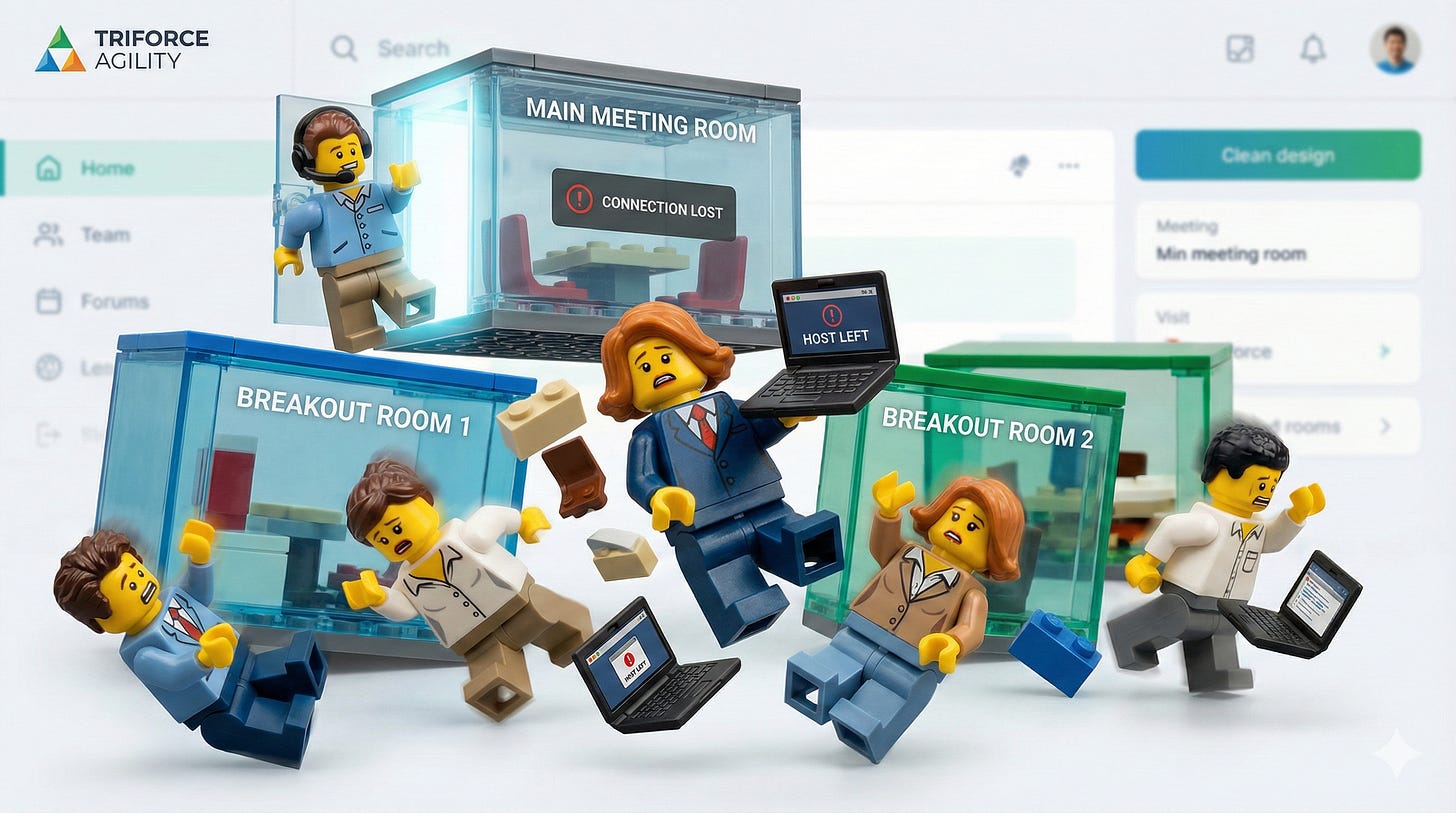
I was running a 1-2-4-All from Liberating Structures. (For y'all who haven't used it: one minute silent reflection, two minutes in pairs, four in foursomes, then whole-group sharing.) Everyone gets a voice before the loudest voices dominate.
Spread everyone into breakout rooms. Noticed I was alone in the main room. Saw one participant sitting solo - their partner must have dropped. My instinct? "I'll join them. I can help."
I clicked.
Panicked messages flooded the chat within seconds. Meeting closed for everyone. Breakout rooms collapsed. Participants dumped back to the lobby.
In Teams, when you're the organizer and leave the main room to join a breakout, you can lose control of the session entirely. Some setups end the meeting outright. Others lock you out of facilitator controls. Either way, the platform enforced what my discipline couldn't.
Liberating Structures is explicit: the facilitator doesn't participate in content generation. But knowing the rule and following it in real-time are different skills.
The technology became my accountability partner.
Creating the Container
I've stopped saying "servant leadership." The phrase has been stretched so thin it means whatever the speaker wants.
What I'm after is simpler: create the container, don't generate the content. Design conditions for success, then get out of the way so the team can fill those conditions with their own thinking.
Scrum.org puts it clearly: the Scrum Master creates a supportive environment for the team's ideas and innovations, but the team generates solutions. In my previous post on becoming a true leader, I argued the future belongs to people who see problems and solve them, who reduce friction wherever it exists, who understand their job is more outside the team than inside it - making the process disappear so humans can focus on humans.
Same principle, applied to facilitation.
Your contribution is the pre-work. The board. The breaks. The psychological safety that lets people disagree without retaliation. If you've built the environment, you've done the job.
Trust the room to do the rest.
I thought joining that breakout was helpful. It was my ego - FOMO mixed with the belief that my presence would improve the conversation.
The data says otherwise.
The Exhaustion is the Point
Why was I on the floor after? Active non-participation is harder than participation.
Sitting in the main room while breakout discussions happened without me was disorienting. Couldn't see anything. Couldn't hear the conversations. No idea if discussions were going as expected or if everyone sat in awkward silence.
And I couldn't fix anything.
That surrender is the actual skill.
Harrison Owen, creator of Open Space Technology, captured this in his four principles. One keeps echoing: "Whatever happens is the only thing that could have." Not fatalism. Trust. If you've built the container well, the right conversations emerge. The right people speak. The right tensions surface.
Looking back, I don't believe I could have made a different choice without that technology failure. My pattern runs too deep. I want to be useful. I want to add value.
Sometimes the most valuable thing I can do is stay in the main room and keep my mouth shut.
Try This Monday: The Parsec Pause
Next time you facilitate, try what I call the Parsec Pause.
When silence hits and your instinct screams to fill it - don't. Wait until the silence feels unbearable. Then, below the table or off-camera, count slowly to five on your fingers. That's how much discomfort must set in before someone else speaks.
Five seconds feels like an eternity when you're holding space. But that pressure pushes someone else to contribute. Every time you fill the silence, you rob the room of someone else's insight.
Your job: design conditions for success. Not provide success. Not guide people toward your vision. Build a container strong enough that whatever emerges beats what you would have produced alone.
Catch yourself about to speak? Ask: "Am I fixing something broken, or just uncomfortable with silence?"
Harder than it sounds. Also the entire job.
Stop contributing. Start creating space.
Continue Your Journey
AI Development for Non-Technical Builders: Learn to build tools that work with you, not instead of you.
Free Resources: Practical guides for teams fighting to do real work.