I Said Facilitation Doesn't Matter. Then I Actually Measured Mine.
I started 2026 by picking a fight.
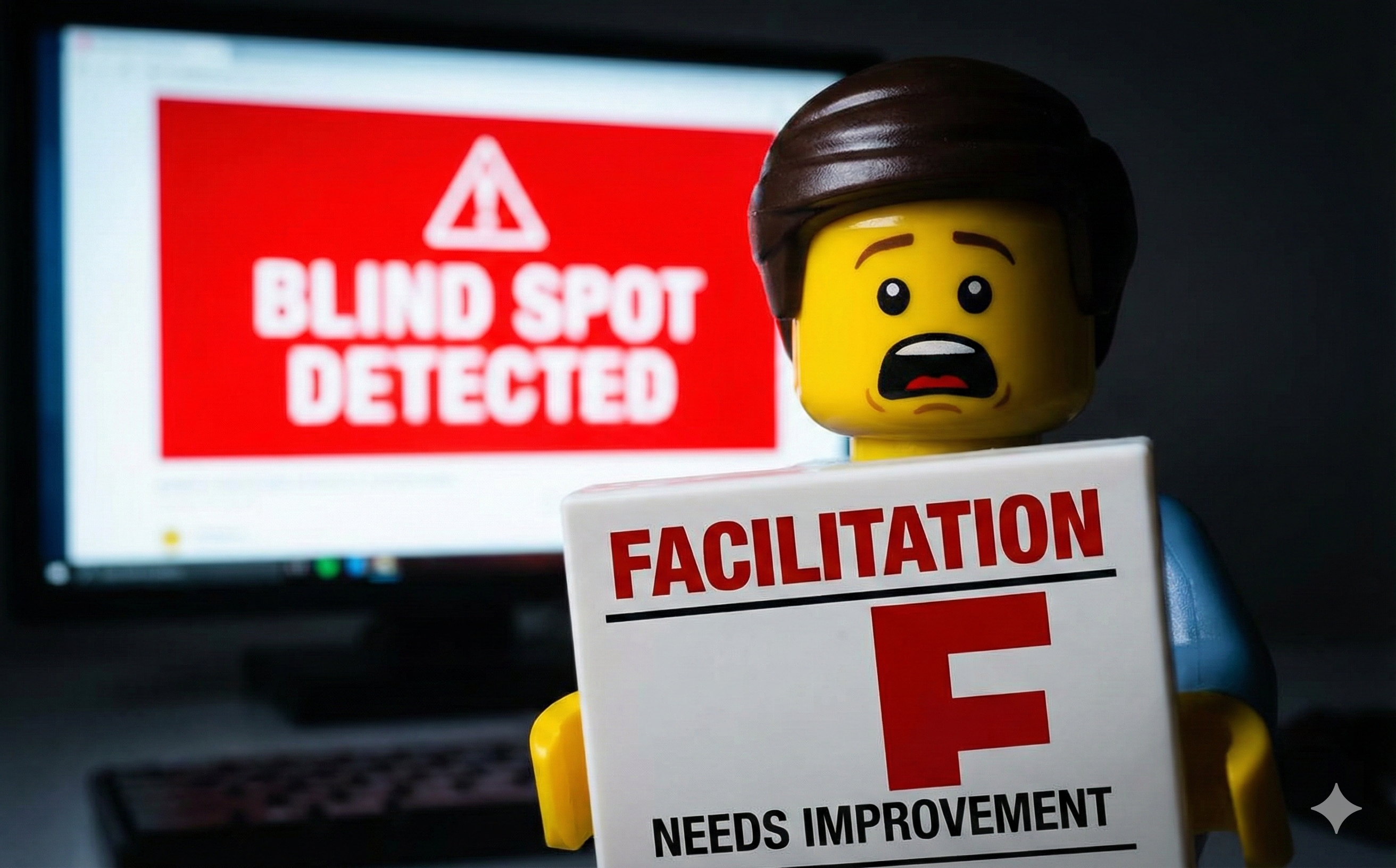
I started 2026 by picking a fight.
On January 1st, I wrote "The Scrum Master Credibility Crisis Isn't About Facilitation". The thesis was blunt: leadership doesn't question Scrum Masters because they can't run a good retro. They question the role because SMs don't map their value to data.
Facilitation? Fine. Important, even. But not the problem.
I defend that argument. And also: I was wrong.
The Experiment That Shone a Spotlight
A few weeks after publishing, I started thinking about my own facilitation. Not defensively - more like a research question. If AI could analyze code quality and sales calls, why couldn't it analyze how I run meetings?
So I built a tool.
Transcription exists, analysis is available - Copilot does it, Otter does it - but the data is scattered across chats and calendars. I built an app to unify it.
My tool ingests all my meeting transcripts from a week. Retros, planning, standups. Then it spits out a synthesis, looking for patterns I miss when I'm busy being lazy.
The first week's report landed with a thud.
What the Data Showed Me
The Good:
- Credible transparency - I'm blunt about trade-offs.
- Inclusive facilitation - I pull quieter voices into the mix.
- Systems thinking - I connect team dynamics to organizational patterns.
Encouraging. But then came the ugly part.
The Bad:
- Time-boxing - I let technical conversations run way too long.
- Clarifying goals - I assumed we were aligned. We weren't.
That second one hit hard. I've been a Scrum Master and Agile Coach for years. Clarifying goals is the job. And yet, when an AI analyzed the actual words I said in actual meetings, it found a gap.
A big one.
The Irony Isn't Lost on Me
My January article argued that Scrum Masters should stop defending their value through facilitation and start proving it with data. What I didn't expect: using data to analyze my facilitation would reveal real problems.
The solution I advocated for exposed the problem I dismissed.
Here's what makes this worse (or better): the feedback was actionable. The second week, I forced myself to clarify goals at the start of each session. I stopped rabbit-hole discussions earlier. I watched myself differently.
The analysis reflected the change.
Scrum Masters rarely get feedback. Nobody observes our meetings unless they're in them. We don't get coaching. We don't get critique.
My friend Shakeel Chaudhary introduced me to the Johari Window, and it has a name for this: the Blind Area. Things others see, but we don't. We operate there, and then we wonder why we plateau.
AI is at every meeting. It doesn't get tired. It doesn't hold back to be polite.
The Both/And
Looking back, I don't think my original thesis was wrong. The credibility crisis is real. Leadership needs data. Hypothesis-driven process improvement matters more than running a smooth standup.
But I missed a piece.
Leaning too hard on data serves the organization. Leaning too hard on facilitation serves the team. Our job is to find the medium that serves both.
Facilitation excellence isn't separate from the data conversation. It is part of it. If you can measure it, you can manage it. Once you manage it, you can prove its value. And that proof allows you to do exactly what I said Scrum Masters should do: map your work to outcomes.
It is for this reason that I discovered the hard path runs through the soft skills.
The Real Takeaway
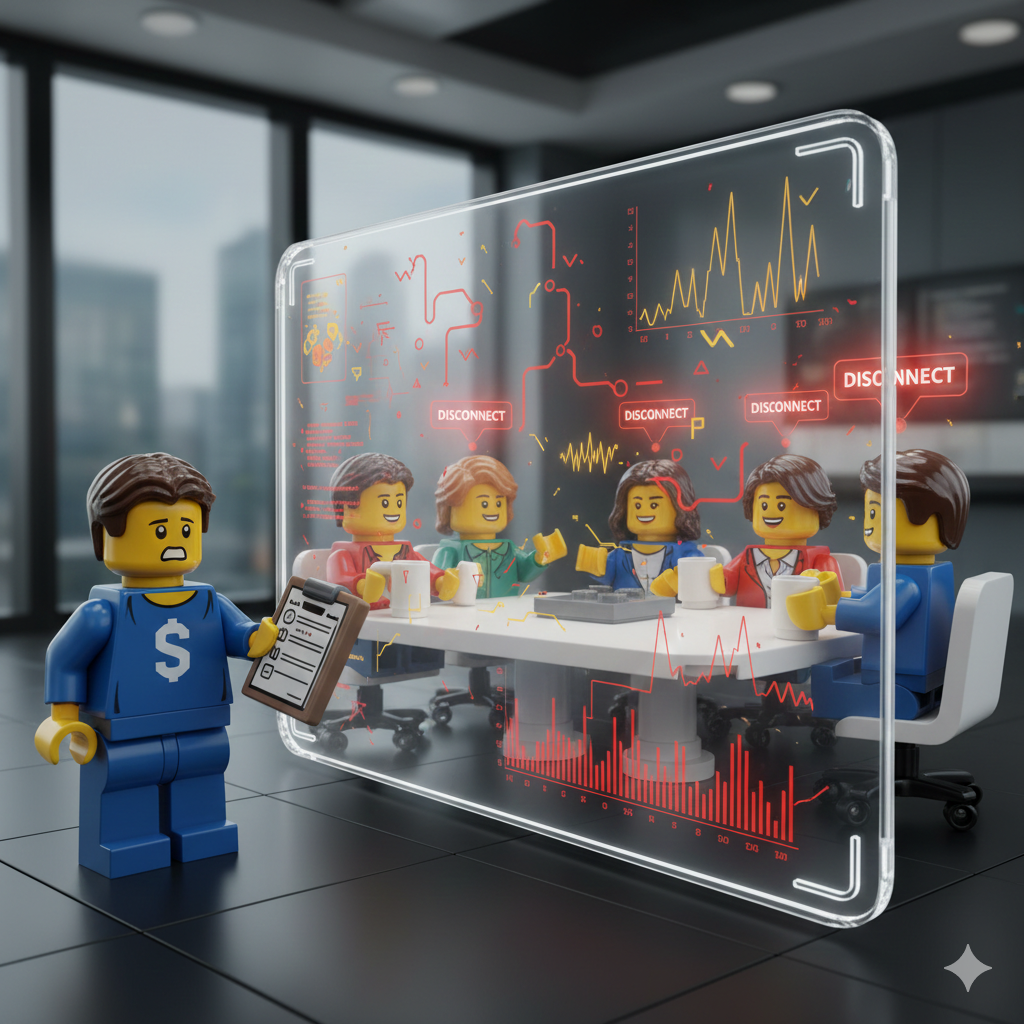
I didn't build this tool to prove facilitation didn't matter. I built it because I'm obsessed with self-improvement. I wanted to see what the data said.
The tool proves I still have work to do.
Not about the credibility crisis - that's still real. But about the idea that facilitation was a solved problem for experienced practitioners? That we could focus on more important things?
We have blind spots. The best way to find them is to stop trusting your self-assessment and start measuring what you actually do.
Run the experiment yourself:
- If you have access to coding tools (Vibe Coding): You don't need to be a developer. Open Cursor or Replit and ask: "Write a tool that I can upload transcripts into. Give me a UI with an updatable system prompt so I can tweak the analysis on the fly. Save the results to a database so I can review my progress over time."
- If you just want the answer: Download a transcript, paste it into ChatGPT or Claude, and ask: "Act as an insightful Agile Coach. Analyze my facilitation in this meeting. Tell me 3 things I missed that an unbiased observer would have caught."
Build an app, or use a prompt (and maybe learn some new skills along the way). And then maybe - just maybe - there is something you can improve with your facilitation.
Your move.
Continue Your Journey
AI Development for Non-Technical Builders: Stop waiting for a developer. Learn how to build your own tools, apps, and automations using AI - just like the facilitation app I built in an afternoon.
AI Tool Bingo Card: A fun way to try different AI tools and discover their individual strengths and weaknesses - because no single tool does it all.