I'm Building the Thing That Might Replace Me
An Agile practitioner's honest reckoning with building AI tools that might make coaching humans unnecessary.
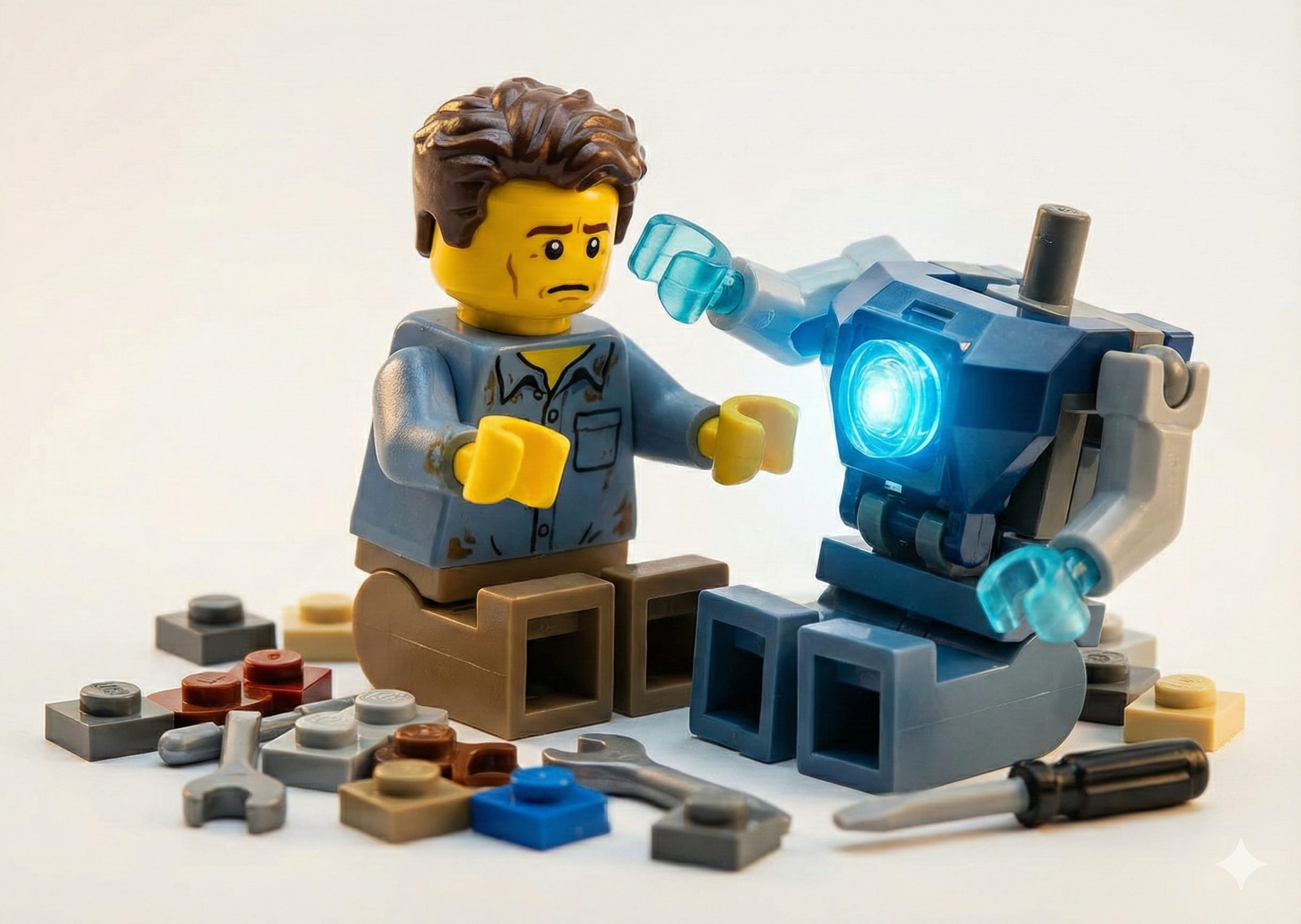
Last Tuesday I sat in a retrospective with a team of engineers and told them to ask AI for help with subtasking. That same evening I went home and spent three hours upgrading the capabilities of my second brain - the AI system I talk to, build with, and increasingly depend on. Half my day coaching humans. The other half building machines that might make coaching humans unnecessary.
I haven’t figured out how to feel about that yet.
Every Release Gets Worse (For Us)
Every time Anthropic drops a new Claude model, OpenAI ships another ChatGPT release, or Google unveils another Gemini upgrade, I watch the same thing happen. Something that took a professional a full day now takes the AI ten minutes. This month I watched Opus 4.6 in Excel do in ten minutes what a professional accountant would need a day to finish. Not perfectly - you still need the accountant to validate it. But here’s the part nobody wants to say out loud:
Today’s model is the worst it will ever be.
METR, the Model Evaluation and Threat Research team, published data showing AI task capability doubles approximately every seven months. For coding specifically? Under three months. Not a projection. A measurement of what already happened.
So when someone says “you’ll still need the human to check the work,” they’re right. For now. But if you have an AI system that’s validating itself, you have an unvalidated system. The window where “checking the work” is the job - and not just a formality - shrinks every quarter.
I Watched a Guy Build a Teleprompter in Two Prompts

I’m on Reddit the other day. Someone posts that they were about to pay for teleprompter software and in two prompts built their own instead. You know what I did? I took that idea, fed it into my second brain, and said “create a PRD for this so we can build our own if we want one.”
That’s the world now. Forbes projects a 15-20% reduction in SaaS software seats by 2026 as AI agents eat entire workflows. I built a YouTube scraper over a weekend that watches a particular news channel and records it so my wife and I can watch the news on our Roku. We live outside of TV range, we don’t pay for cable. Problem, AI, solution. In a weekend.
The number of prompts it took me to build that? It’ll be one in six months. I’ve been watching it happen in real time.
The Software Engineering Thing Is Real
Anthropic and OpenAI have both said that software engineering as we know it will be gone within 12 to 18 months. I used to think that was hype. Then I started living it.
I’m a Scrum Master, not a software engineer. But I write tools. I build things that help my teams work better, that surface what’s hidden in the data, that uncover patterns nobody had time to look for. My website, my survey platform, the second brain I’m recording into right now - all built by agents I directed. I write the prompts. I make the architectural decisions. I review the output. The actual typing-code-into-an-editor part? That’s the agent’s job now.
By end of 2026, nearly half of all new code will be AI-generated. 70% of companies will have adopted some form of AI-assisted development. And those numbers feel conservative from where I’m sitting.
Smart engineers are moving from writing the code to orchestrating systems of agents - focusing on architecture, strategy, and judgment. That’s not a prediction from a futurist. That’s a description of my Tuesday.
The Part Nobody Wants to Talk About
AI wiped out 55,000 US jobs in the first eleven months of 2025. A 400% increase year over year. Goldman Sachs estimates AI could displace 6-7% of the US workforce, concentrated in white-collar roles. The World Economic Forum says it’ll create 11 million jobs while displacing 9 million.
Cool. Tell that to the 9 million.
52% of US workers now express fear of job displacement from AI - nearly double the previous year. Half the workforce is scared. The government’s response? The Department of Labor released an “AI Literacy Framework” in February 2026. A literacy framework. While AI coding ability doubles every three months, we’re publishing frameworks about learning to read the thing that’s already eating our jobs.
America’s AI Action Plan, unveiled in July 2025, talks about “empowering workers” and “pilot programs” and “workforce research hubs.” If that sounds like the policy equivalent of a Sprint Zero that never ends, you’re paying attention.
So Where Does That Leave Us?
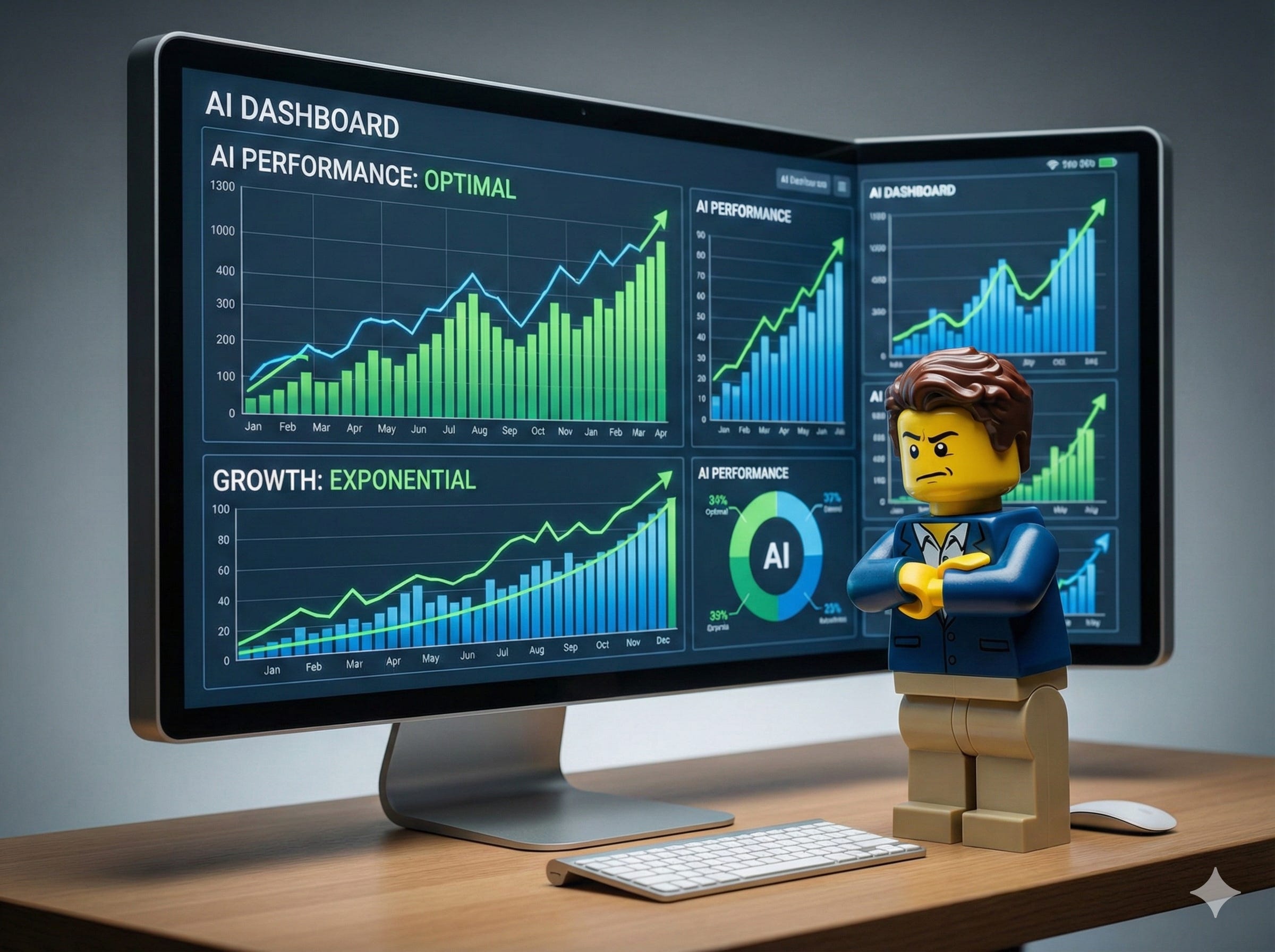
I’ll speak for my corner of the world. As Agile practitioners - Scrum Masters, Release Train Engineers, Agile Coaches - I don’t know.
But I’ve been watching closely. AI strategist Nate Jones calls this “Year One” of the Agentic Era, and the framing hit me hard. Agents aren’t autocomplete tools anymore. They’re autonomous workers generating thousands of production commits. Soon they’ll hold enough context to perform months of work without supervision.
Think about what that means for a Scrum Master. We’ve spent our careers measuring velocity based on human effort. Story points. Cycle time. Throughput. All anchored to the assumption that humans are doing the work. When agents generate the output, we’re not measuring effort anymore. We’re managing intelligence. The backlog isn’t a list of tasks for humans to do - it’s a queue of outcomes for humans to verify and guide.
We will be drowning in competent output. The bottleneck flips entirely. We stop asking “How can we work faster?” and start asking “Is this the right work?” Different muscle. Judgment, not execution.
Right now I’m focusing on learning AI, harnessing it, teaching everyone else how to use it. I talk about AI use cases in every meeting. Last week I sat with an engineer talking about a feature and the admin burden of creating stories in Jira, and I said: “Why don’t you vomit prompt into AI and have it spit back your stories, then you validate?” Remove the friction. That’s the pitch.
I’m building a Cursor Analytics dashboard to help my organization understand how Cursor is being adopted into our ways of working. What models people are using. What questions they’re asking. Are they using Ask, Plan, or Agent mode? Are they running MCPs? I’m looking at the correlation between AI usage and tickets. Bugs had one of the lowest correlation rates with AI usage - not what I expected.
A colleague built a tool to check repos for their AI readiness. Another project moved from Confluence to GitLab for documentation specifically because AI agents can read what’s there to understand how decisions got made.
We’re accelerating. Every single day.
I’m Excited and I’m Scared

I look around my house and I’m not sure where the future is going. I have a garden. Some practical skills. Maybe I’ll take over my dad’s boat and small engine repair business. Probably not. But maybe my 18-year-old should. We’re talking about the world of work, the thing adults are supposed to be good at, and at the point where the future is most uncertain from a workforce perspective, we don’t have the societal infrastructure or economy to support the transition.
Jones identifies four human skills that survive the agentic era. They stuck with me because they map almost perfectly to what I’ve been doing as a coach for years - I just never had to frame them as survival skills before.
Taste. The instinct to look at an agent’s output and know the difference between competent and extraordinary. AI can generate technically correct work all day long. But “technically correct” and “strategically right” aren’t the same thing. Teams who develop that filter will thrive. The ones who rubber-stamp agent output? They’ll ship mediocrity at unprecedented speed.
Exquisite Domain Judgment. General coding knowledge is becoming a commodity (it’s already there for about half of what I build). The value lives in knowing why a specific architectural decision will cause pain in 18 months, or why a particular workflow breaks under pressure. Hard-won wisdom from years in the trenches, not from a training course. Our retrospectives and planning sessions need to focus entirely on capturing and sharing that contextual wisdom, because the “how-to” part? Handled.
Phenomenal Ramp. The ability to update your mental model weekly. Not quarterly. Not at the next PI Planning. Weekly. With Opus 4.6 and Codex emerging and evolving in the space of weeks, holding onto a static workflow is fatal. We can’t just “add AI features” to our current way of working. We need to rebuild our architecture to be agent-first.
Relentless Honesty. This one’s the hardest. Looking at your own work and admitting which parts are genuinely valuable and which parts an agent handles better. For Scrum Masters, that’s a brutal inventory. Meeting facilitation? Agent-assisted. Status reporting? Automated. Story subtasking? I’m literally telling my own teams to hand that to AI.
So what’s left? Judgment. Taste. The ability to read a room and know when the silence means “we’re aligned” versus “we’ve given up.” The ability to see that a team’s energy drops every Tuesday at 2 PM and connect it to the stakeholder meeting at 1:30. No agent picks that up. Not yet.
Maybe the future for my job is I move into product, architecture, and delivery. You know what’s going to get me there? AI.
Maybe I develop a tool and share it with people, open source or otherwise. Even though SaaS applications are getting their legs swept.
I don’t know where the future is going. The industry research says “humans will evolve into strategic roles” and “Scrum Masters will become Business Agility Architects.” Maybe that’s true. But “evolve” is doing a lot of heavy lifting in that sentence. How many of us can actually make that leap? And who’s investing in our transition?
The Department of Labor’s pilot programs? The AI Literacy Framework? Sprint zeros for a marathon that’s already started.
My friend Marco Braun wrote something recently that stuck with me:
“Being behind while moving forward is different from being behind while standing still.”
I’m not behind - not yet. But I feel the ground shifting.
It is for this reason that I keep building. Keep learning. Keep teaching. Not because I have answers, but because standing still is the one option that’s guaranteed to fail.
I’m building the thing that might replace me. And I’m going to keep building it. Because the alternative - pretending it’s not happening - is worse.
So where is Agile going? Where is software engineering going? Where is software itself going? Where are we going?
I’d genuinely love to hear what y’all think. Because I don’t have the answer. And I’m not sure anyone does.
Continue Your Journey
AI Development for Non-Technical Builders: Learn to build AI agents and tools without a computer science degree - the same approach Fred uses to build the tools described in this post.
Free Resources Hub: Calculators, guides, and frameworks for practitioners navigating the AI-accelerated world of work.