The Resume Is A Dead Asset: Why Your Career Infrastructure Needs A 2026 Reboot
The traditional PDF resume is a static lie in a dynamic world. Stop waiting for the market to stabilize and start building your own career infrastructure — a living digital twin that works for you while you sleep.

In 2019, I was sitting in my car staring blankly at the steering wheel. I had just been handed my fourth layoff. Four.
Looking back, I remember turning the key in the ignition and listening to Vasco Duarte's Scrum Master Toolbox Podcast. I wasn't just trying to drown out the noise in my head. I was looking for a signal. Those guests and their stories weren't just background noise—they were the insights I needed to realize the rules of the game I thought I was playing were entirely fabricated. The loyalty I’d shown meant nothing. My years of service were just a rounding error on a corporate spreadsheet.
I made a quiet vow right there in the driver's seat.
"I'm going to be on that podcast someday."
By 2022, I was. That single decision sparked a chain reaction. Investing in yourself isn't some movie-style leap; it’s a thousand boring, small steps that finally start to compound. Over the next few years, I pushed myself onto stages across the country, delivering 20+ talks to anyone who would listen. By 2025, I was a regular at major events because I stopped waiting for permission and started building my own stage.
The story of the modern agile practitioner is one where a false sense of security masks a career in crisis. We cling to the idea that doing good work keeps us safe. We polish our static resumes, update our LinkedIn headlines to "Open to Work," and wait for the market to "normalize."
If y'all are waiting for the market to stabilize, you're falling into a dangerous comfort trap. The market doesn't care about your loyalty.
Tech layoffs aren't slowing down. Crunchbase tracked over 122,000 in 2025 alone. The odds of a quick comeback? Brutal. Data from 365 Data Science shows that only about 28 percent of laid-off software engineers and program managers get back to work quickly.
Your resume is a dead asset. It's a record of a game you aren't even playing anymore.
The Geography of Survival
A former co-worker called me recently. They’re hunting for a new role. I sent over a few introductions to hiring managers, and they stopped me.
They wanted to know how I, sitting in Oregon, had so many active connections half a country away in Iowa.
It wasn't magic. It was infrastructure. I spoke at KCDC and DevOps Days Des Moines because I forged connections that don’t care about my zip code. I approach my career with a specific assumption: It's not a matter of if I'll get laid off, it's when.
Most professionals treat networking as an emergency response. They wait until the badge stops working to start sending cold messages. You cannot build a relationship when you are desperate for a job. Because I operate with the certainty that a layoff is coming, I build systems that exist independently of my employer.
We have to move from the anxiety of job security to the power of career sovereignty. The APA says 54 percent of us are stressed about job security. Waiting for a corporation to protect you is just a slow-motion panic attack.
Employment is just a temporary funding source for my permanent career infrastructure. That's it.
The Three Pillars of Self-Mastery
Last year, I gave a talk at Bob Galen's Badass Agile Coaching Days about this exact shift. Building career infrastructure is not about "networking" in the sleazy sense. It is about building a living asset through three specific pillars.
Pillar 1: Continuing Education
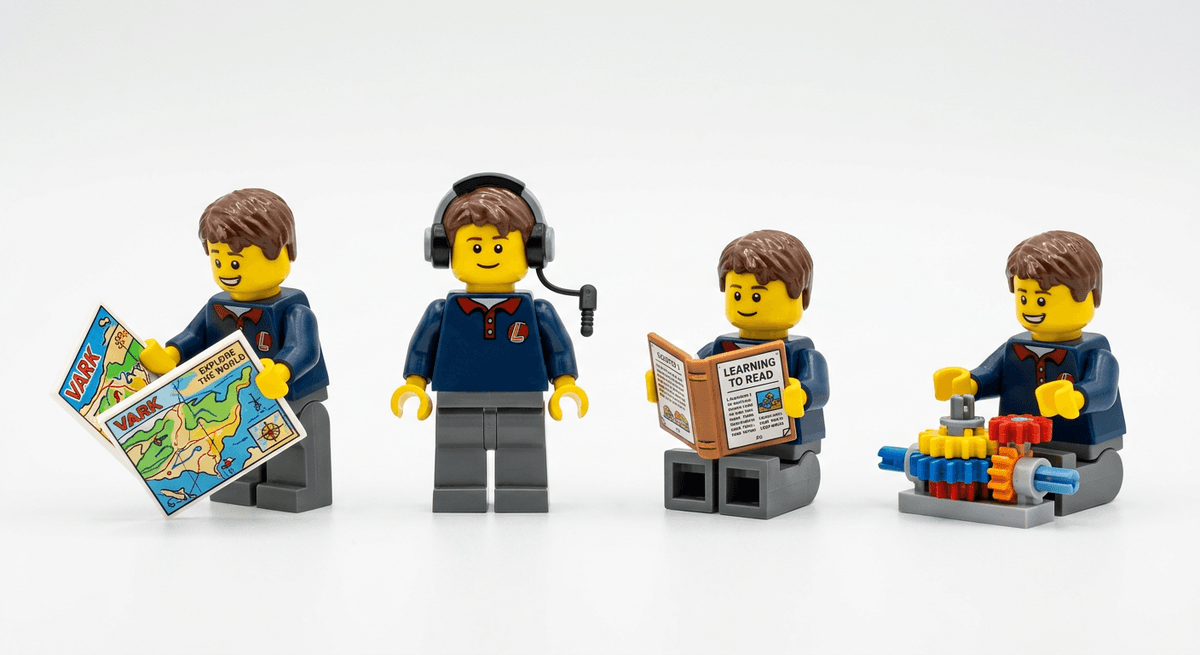
Learning is not one-size-fits-all. If you are consuming generic content in a format that fights your natural wiring, you are wasting mana. Find your edge using the VARK model—basically, how you're wired to learn.
Some practitioners are Visual. They turn ideas into images. They need diagrams and visual cues of achievement to make concepts stick.
Others are Auditory. They transform conversation into understanding. They need to hear the podcasts, join the debates, and ask questions aloud.
Some are Reading/Writing dominant. They shape clarity through words. They devour text and replicate it through written reflection.
And many Agile Coaches are Kinesthetic. They learn by doing. They have to run the workshop, experiment hands-on, and figure things out through physical interaction.
Stop forcing yourself through heavy academic books if you are a kinesthetic learner. Find your superpower.
Pillar 2: Community Involvement
The lie we tell ourselves is that networking is only for extroverts. This is false. Growth thrives in dialogue, but how you engage depends on your communication style.
Talk-to-Think: You discover clarity through dialogue. You refine your ideas as you speak. Your community involvement looks like Lean Coffees, conference watercoolers, and live workshops.
Think-to-Talk: You shape clarity through preparation. You turn private thought into confident expression. Your community involvement looks like Slack channels, Discord servers, and contributing to Communities of Practice.
You do not have to be the loudest person in the room. You just have to be consistently present in the format that matches your voice.
Pillar 3: Self-Reflection

Experience doesn't equal wisdom. Reflection reveals the patterns that turn a failed sprint into a coaching breakthrough.
I use a simple rule: I reflect after every single interaction. I ask myself, did it go the way I had intended or hoped?
You can structure this using the ERA Cycle (Experience, Reflection, Action) or Driscoll's "What?" model:
- What happened? (The objective facts)
- So what? (The emotional impact and meaning)
- Now what? (The specific action to change next time)
Reflection is your insight engine. It ensures you are actually gaining ten years of experience, rather than repeating one year of experience ten times.
Building Your Own Stage
Stop acting like an employee and start acting like a product.
A product needs a home. Social Media Examiner found that 74 percent of clients trust strong personal brands more. Your infrastructure requires a digital foundation that you completely control.
I call this the Weekend Build.
You can build your own website in an afternoon. This isn't about creating a digital resume. A resume looks backward at what you did for someone else. A website looks forward at the value you can create for the market right now. (Plus, you don't have to be a developer to do it.)
Build a personal website workflow that doesn't require you to become a full-stack engineer. Design OS handles the vision. GitHub handles version control. Vercel handles deployment. You handle the content.
When you publish your first piece of thinking, a profound psychological shift occurs. You stop being a passive worker waiting for a paycheck. You become a sovereign architect.
If you lose your job on a Tuesday, your infrastructure is still standing on Wednesday. Your network in Iowa still knows your value. Your website is still generating trust. The market can take your title. It cannot take your infrastructure.
The Weekend Dare
Try this Saturday:
Take your longest, most detailed resume. Look at the bullet points you spent hours agonizing over. Realize that a hiring algorithm will scan them in milliseconds and likely reject you anyway.
Then, go register your own domain name. Use my Website Pipeline Guide to stand up a digital home that you own. Write 300 words about the biggest mistake you made this month and how you’d fix it if you had a do-over.
Hit publish. Stop polishing your resume. Start building your infrastructure.
Continue Your Journey
Your Website in an Afternoon: Stop relying on a static resume and build a living digital asset that you completely control.
Speaking & Keynotes: Bring these concepts to your organization and help your teams shift from passive workers to sovereign architects.