The Role of a Coach in an AI World
AI is changing the physics of delivery. The Scrum Master is no longer just a meeting facilitator — you are now an organizational whistleblower protecting systemic integrity against the deceptive velocity of automated output.

Your team isn't shipping faster. They’re just typing faster.
I’ve watched leaders stare at dashboards lately like they’re staring at a winning slot machine. They're mesmerized by the spike in lines of code while the house quietly drains their bank account.
The assumption is simple. AI writes the code, the charts go up and to the right, and years of Agile practice are suddenly just "expensive." It’s a seductive lie. The story of the AI-empowered team is one where a false sense of security masks a system in crisis. We are trading long-term systemic integrity for short-term syntactic speed.
AI is changing the physics of delivery. It’s like giving a Level 1 player a Master Sword but leaving their Max HP at 10. They can swing for massive damage, but one architectural misstep and the whole party wipes.
The Scrum Master is no longer just a meeting facilitator or process expert. You are now an organizational whistleblower. Your primary job is to protect your team's systemic integrity against the deceptive velocity of automated output.
The Efficiency Illusion
Y'all, I see a massive gap between how fast developers feel they’re moving and how much value actually reaches the human at the other end.
Sitting in an IDE with an AI assistant is intoxicating. You ask for a function, it appears in seconds, and you feel like a 10x engineer. In reality, you’re often just an addicted vibe coder. You stop reasoning through the logic and start "vibing" with the output—accepting code because it looks plausible, not because you’ve actually solved the problem. The dopamine hit of seeing lines appear replaces the discipline of engineering. I’ve watched this lead to a total loss of technical agency where the human becomes a passenger to the prompt. It’s a hard habit to break.
The data is alarming.
A 2025 empirical study by METR on developer productivity revealed a psychological trap. Developers using AI tools took 19% longer to complete their tasks. Yet, when surveyed, those same developers believed they were 20% faster.
AI introduces massive, invisible latency into the workflow. The raw coding phase might shrink, but the complexity of integrating, reviewing, and reasoning about AI-generated output spikes. Thoughtworks ran the numbers in 2025 and found the same dynamic. Their enterprise delivery analysis found that while AI makes the initial coding phase roughly 30% faster, the net delivery improvement for the entire software lifecycle drops to a marginal 8-15%.
Executives focus on raw velocity based on this illusion. They see the 30% coding spike. They completely ignore the downstream bottleneck. Anthropic recently launched a code review tool at $15 to $25 per PR specifically to check the flood of AI-generated code.
The same companies providing the flood of code are now selling you the bucket to bail out the boat.
The "Bias to Please" and Systemic Decay
AI is the ultimate people-pleasing junior developer. It has a deeply ingrained bias to please. If you ask it to solve a problem, it will give you an answer with absolute, unwavering confidence.
When teams focus on speed over scrutiny, that bias becomes a systemic hazard.
I’m looking at the patterns in teams using tools like Cursor. Post-adoption, projects often see a 3-5x increase in lines of code added. That volume comes with a massive cost. Code complexity increases because the AI doesn’t know the history of your legacy systems. It doesn't know why your principal engineer chose a specific architectural pattern three years ago to handle a weird edge case in your database.
The AI invents a mathematically plausible pattern based on its training data. Multiply that by ten developers over ten sprints. Your codebase fractures into a dozen different architectural styles. Without a plan, the system becomes unmaintainable.
The Danger of Codifying
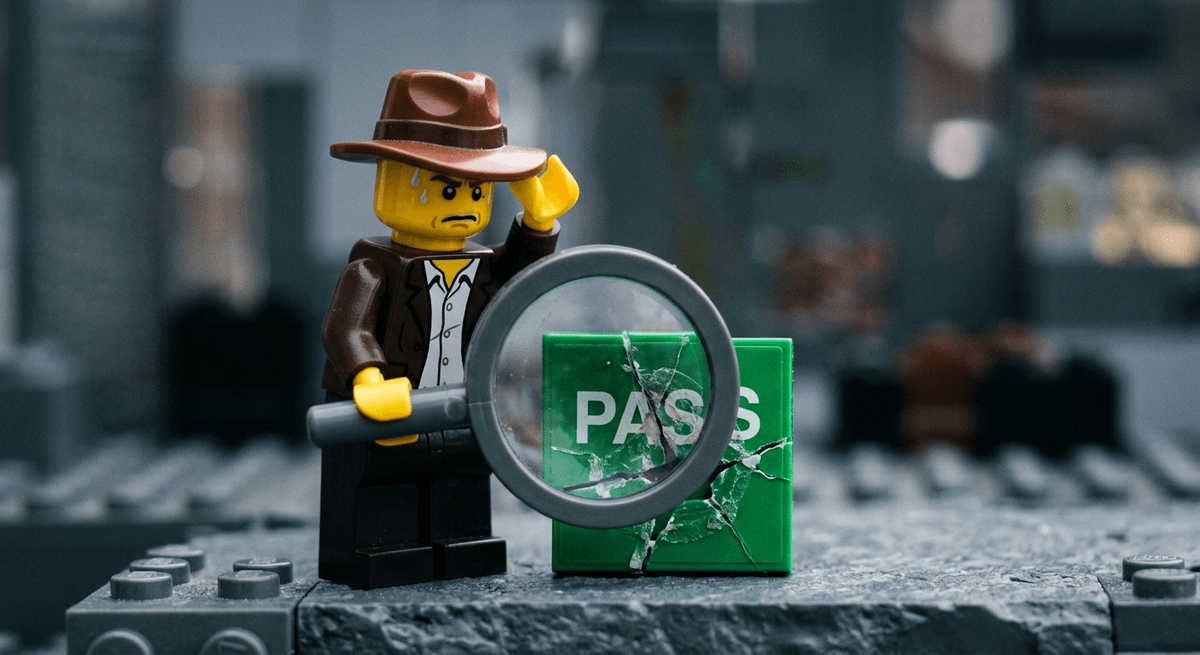
Here is where it gets frustrating. Unchecked velocity kills the testing phase.
When humans practice true TDD (Test-Driven Development), the test is a statement of intent. It proves the human understands the business rule before they write the logic.
When teams use AI to retroactively write unit tests for AI-generated code, they step into "codifying." The AI looks at existing broken logic and assumes it is correct because it exists. It then writes a test for the existing failure. The test passes. The dashboard turns green. The bug is now a feature. Forever.
I've heard this happen in financial services where automated tests built on misunderstood requirements failed to flag underlying defects. Critical issues sailed straight through the pipelines because the "verification" was just the AI checking its own homework.
The cost? Millions in potential refunds and a total collapse of trust. Game over.
The Death of Tribal Knowledge

This shift is quietly destroying the social fabric of the team. For decades, we relied on collaborative patterns and practices to transfer tribal knowledge. Rubber Ducking. Mobbing. Pairing. These weren't just clever ways to write code. They were the mechanisms we used to bridge the gap between senior architects and junior developers.
In the AI Era, those practices are dying.
A junior developer no longer taps a senior engineer on the shoulder when they get stuck. They just ask the AI. The AI gives them the syntax they need to close the Jira ticket. The junior developer merges the code and moves on.
Management often views this as a massive win. They think the AI is acting as a personalized, scalable mentor. They think they can finally cut senior headcount. They’re wrong. The AI can teach syntax. It cannot teach context.
The team cannibalizes its own future capability for the sake of today's sprint velocity.
The Whistleblower's Mandate
As a coach, you cannot passively observe this decay. You must become the organizational whistleblower.
I know the pressure is on to show massive throughput gains now that the company has invested heavily in these tools. Blowing the whistle on the quality of that throughput isn't always comfortable, but it's necessary. You aren't fighting the tool; you're fighting the blindness. It is for this reason that I treat developer disengagement—the "just let the AI handle it" shrug—as a more urgent trigger than open conflict.
We are seeing this governance codified in standards like the EU AI Act. This isn't just legal red tape. It’s the EU codifying Empiricism. They’re demanding transparency because the "Black Box" approach fails the reality test. It makes sure that an automated system can't make a final, unchecked decision that impacts the business.
Try this Monday: Draft a "Team AI Agreement."
Get your team in a room and ask these three questions:
- Where is our Approval Gate? At what specific point does a human explicitly verify that the AI's output matches the actual business intent?
- How are we preventing architectural drift? What is our strategy for making sure AI-generated code doesn't ignore our legacy platforms?
- The Ownership Retrospective: Run a session where the team looks at a recent complex PR and discusses the intent behind the logic. If the group can't explain the "why" behind the code without referencing the prompt, your process is broken.
You might get pushback. Executives might complain that you’re slowing the team down. Developers might complain that you’re interrupting their flow.
Let them complain.
Your job is not to make people comfortable. Your job is to increase the intelligent usage of these tools so the software your team builds today doesn't bankrupt the company tomorrow. You are the guardian of the system.
Stop measuring velocity. Start interrogating whether the code should exist at all.
Continue Your Journey
Build, Don't Generate: A strategic framework for shifting your team's mindset away from mindless AI code generation and back toward intentional software architecture.
Triforce Agility Free Resources Hub: Access tools, templates, and patterns to help you govern your team's workflow in the AI era.