The Lazy Scrum Master's Guide to Becoming a True Leader
Why I stopped being a Master of Scrum and started building tools that eliminate toil
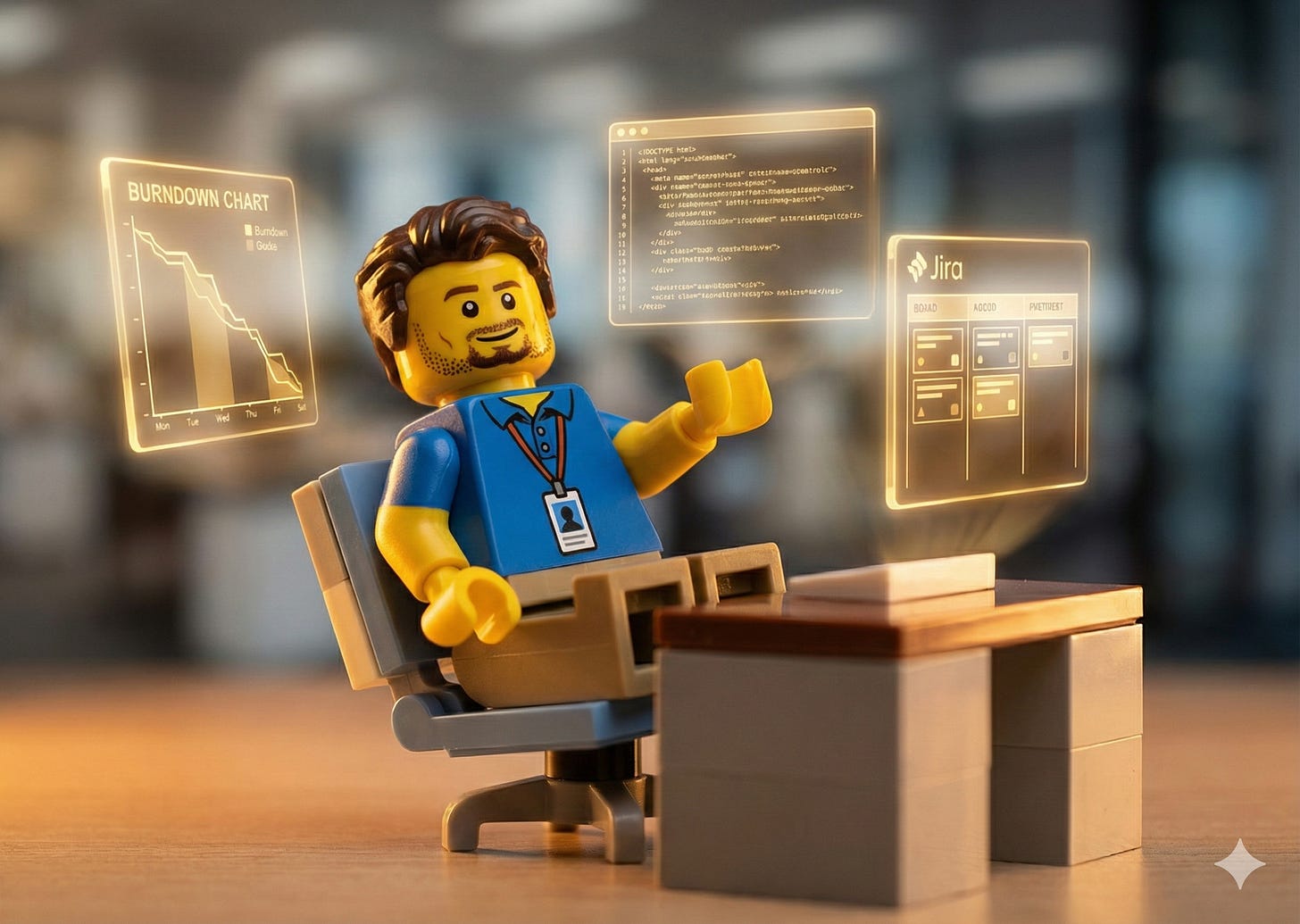
I want to be the laziest Scrum Master I can be.
Not a confession. A strategy.
For years, I watched myself and my peers drown in toil - the manual, repetitive, non-value-add activities that eat up our days. Copying data between systems. Building reports by hand. Pulling metrics from three different tools to answer one simple question. We called ourselves "servant leaders," but we spent more time serving spreadsheets than serving people.
The uncomfortable truth? We all knew. We just didn't know what to do about it.
The Journey to Vibe Coding
My journey started long before AI showed up.
I was already the Scrum Master who loved Excel. Pivot tables. CSV exports dumped into formulas I'd cobbled together from Stack Overflow and sheer stubbornness - rolling the d20 on whether my VLOOKUPs would work or spectacularly crit fail. Two systems that didn't talk to each other - Jira and another ticketing system - and every week I was manually bridging that gap with spreadsheets and copy-paste workflows.
Tedious. Error-prone. And worst of all, time I wasn't spending on the work that actually matters: coaching conversations, facilitation, helping teams get better at working together.
So I started experimenting. Uploaded my ideas into ChatGPT. Copied out Python code. Compiled it myself. Had no idea what I was doing, but the thing worked. Kind of.
That moved on to VS Code with Copilot. Then, over four months, Cursor. And with each iteration, my ability to develop a better product was amazing. Not because I became a programmer (I'm still not a developer) but because the barrier between "I wish this existed" and "I built this" collapsed.
They call it "vibe coding" now. Andrej Karpathy coined the term in early 2025 to describe using natural language to guide AI in generating functional software. But I was already doing it before it had a name. Most of us who've embraced these tools were.
The Role We've Been Playing Wrong
We've been thinking about the Scrum Master role all wrong.
We don't call ourselves "Masters of Scrum." But we act like it. Obsessing over the framework - the events, the artifacts. Debating story points and velocity and whether retrospectives should have themes. Meanwhile, the world changes around us.
The future belongs to Scrum Masters who become true leaders. Not masters of a methodology, but people who see problems and solve them. Who reduce friction wherever it exists. Who understand that their job is more outside the team than inside it - making the process disappear so the humans can focus on the humans.
And right now, AI is handing us the tools to do exactly that.
Learning Through Play
Let me tell you about the bingo card.
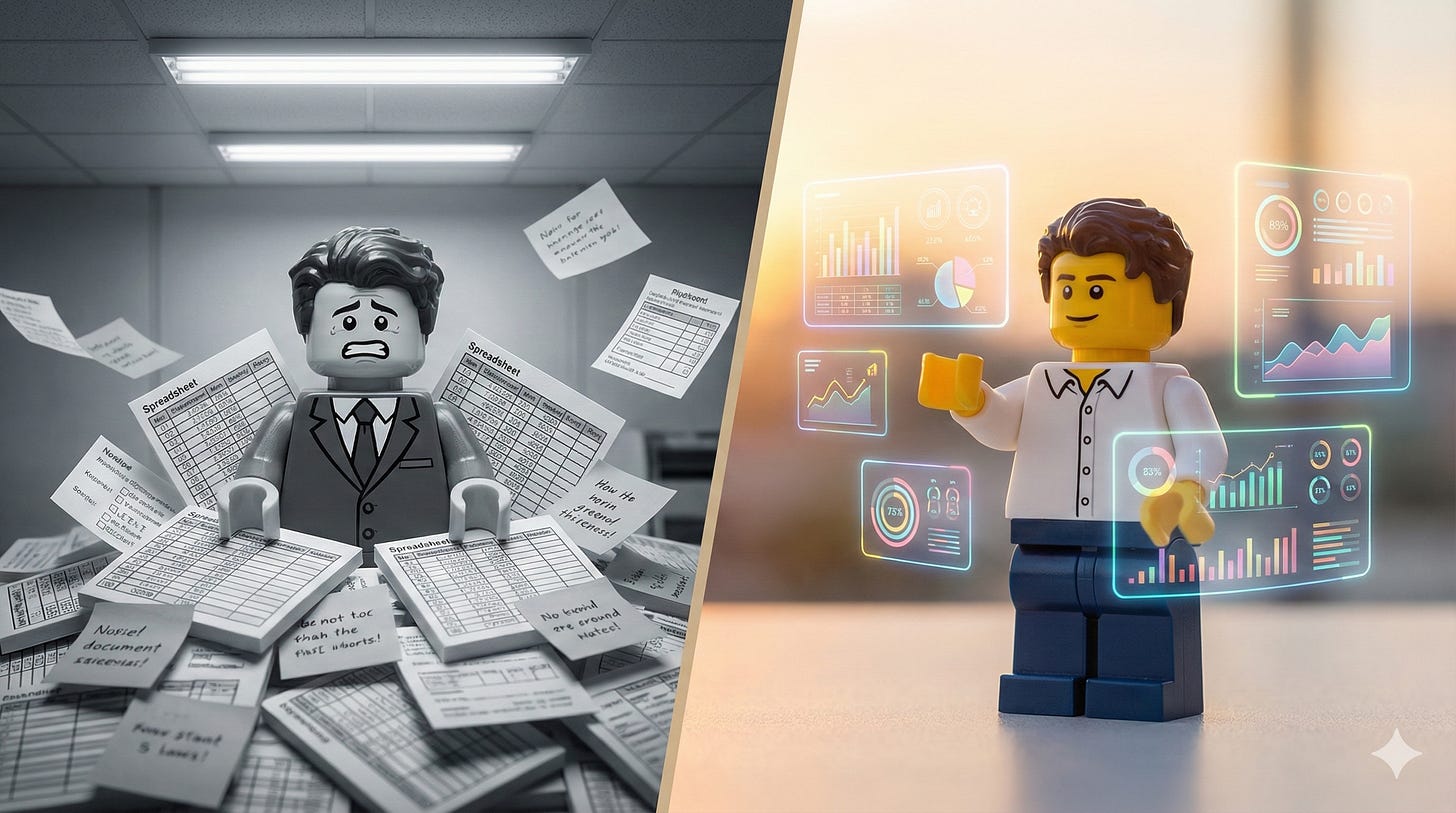
For a conference talk I gave a few times last year - "6 Ways You're Using ChatGPT Wrong and How to Fix It" - I vibe coded a thing. Asked five AI models to create tasks for the other models in a bingo card. Each model designed challenges for its competitors. Roleplay a difficult stakeholder. Cluster restaurant tickets into a theme. Research a topic and report back. (link: https://triforceagility.com/ai-tool-bingo-card.pdf)
Each model came up with a completely different board. Their personalities showed through in what they thought was interesting, challenging, worth exploring.
Production work? No. Play.
I did the same for a talk I gave on Triggers and Hooks - vibe coded interactive cards that helped workshop participants identify their own patterns. Triggers are the moments you observe in coaching; Hooks are the curious responses that open up the conversation. Something that would have taken hours to design in PowerPoint came together in a conversation with an AI. Worked better than anything I would have built manually.
Play teaches you how the tools think. Once you understand how they think, you can use them to eliminate the toil that's been stealing hours from every Scrum Master I know.
I stopped treating AI like a search engine. When I find a prompt that works, I take it further - use Cursor to turn that conversation into a repeatable program. Save those prompts in version control. Iterate on them over time. I'm taking generative AI and turning it into automation. Still AI, but now it's working for me every time, not just once.
That's how I scale my laziness.
What Doesn't Work
But I should be honest about what doesn't work.
Vibe coding fails when I don't understand what I want. When I go in with a vague idea - "help me build something for sprint planning" - what comes out is garbage. The AI is only as good as my ability to articulate the problem. If I can't explain what I need, no amount of prompting will save the output.
Discovered this the hard way. Multiple times.
The tools amplify clarity. They also amplify confusion. When I'm crisp about the goal, they're magical. When I'm fuzzy, they're a waste of time - unless I tell them I'm fuzzy and ask to have a conversation before we start building.
That works too.
The Smile and Nod Problem
When I tell other Scrum Masters about this journey, I mostly get smiles and nods. Polite interest. Then nothing happens.
A few months later I'll ask: "Did you try that tool we talked about?" And the answer is usually no. They're busy. They're comfortable. The current way works well enough.
I get it. I really do.
But I also wonder: what happens when "well enough" stops being enough? What happens when organizations start asking why they're paying for event facilitators when the events can run themselves?
The Counterargument
What if this whole evolution is wrong? What if I'm optimizing for the wrong thing, learning skills that won't matter in two years?
The counterargument I keep coming back to: even if I'm wrong, I've learned something. Diversified my value. Developed technical intuition that makes me a better coach even if I never write another line of Python.
Worst case isn't that different from best case. Either these skills become essential and I'm ahead of the curve, or they become obsolete and I'm still a better Scrum Master for having explored the edges.
That's a bet I'm willing to take.
Eliminating Toil, Not Doing Their Work
I encourage experimentation among the Scrum Masters I work with. They've been developing their own tools - building UIs to get data insights that weren't available before. Creating dashboards that answer the questions leaders actually ask. Bridging gaps between systems that IT never had time to prioritize.
Not about taking work from the development team. The team builds the product. We're eliminating the toil around the product - the friction, the manual overhead, the administrative burden that slows everyone down.
When I build a tool that saves two hours a week, those are two hours I can spend in actual conversation. Two hours for coaching. Two hours for the human work that no AI will ever replace.
The Human Problem
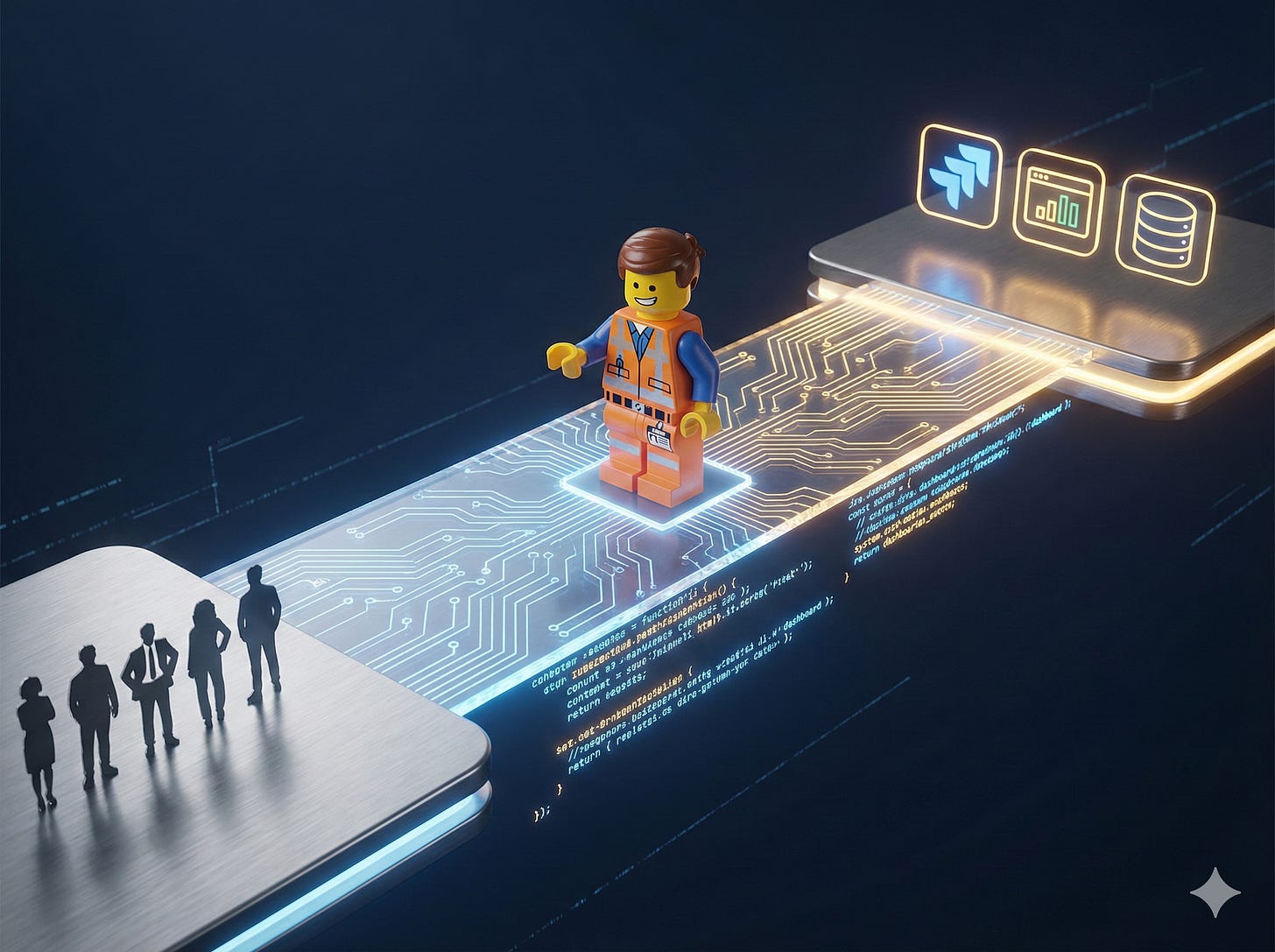
Bob Galen, who's been coaching in this space longer than most of us have been in tech, puts it this way: "Every problem is a human problem within complex organizational systems. AI will not solve human interaction challenges."
He's right. AI won't solve human problems. But it frees us up to focus on them.
The toil that's been stealing our attention - it doesn't have to. The manual work that makes us feel busy but doesn't make our teams better - I've found ways to automate it. The hours we lose to systems that don't talk to each other - I built the bridges myself.
Somewhere along the way, I stopped being a Master of Scrum and started becoming a leader of teams.
Guiding the AI Evolution
Organizations need Scrum Masters to guide them through the AI evolution.
Every team I work with is grappling with how AI changes their workflow. Developers adopting Copilot and Cursor. Product owners using AI to draft user stories, analyze customer feedback, synthesize research. Stakeholders asking questions about automation, efficiency, what's possible now that wasn't possible six months ago.
Someone has to help teams navigate this transition. Guide the conversations about how AI fits into the way we work - not just the technical implementation, but the human dynamics. The fear. The excitement. The uncertainty.
That someone should be us. We already coach teams through change. We already sit at the intersection of process and people. We already have the skills to help a room full of humans figure out how to work differently.
But here's the catch: we can only guide organizations through the AI evolution if we've been through our own.
I found I couldn't coach a team on integrating AI tools until I'd used them myself. Couldn't guide a conversation about workflow change until I understood the capabilities and constraints from personal experience. Couldn't help a developer navigate their evolving role while clinging to a role definition from 2015.
The Scrum Master's AI evolution isn't optional preparation for helping teams - it IS the preparation. Every tool I've learned, every experiment I've run, every bingo card I've vibe coded for no reason other than curiosity - all of it accumulates into the credibility and understanding I need to guide others.
The Market Reality
The market is shifting. I'm not going to sugarcoat it.
The tech industry saw over 260,000 layoffs in 2023, another 237,000 in 2024. Companies like Capital One eliminated entire Agile facilitator roles. Some analyses suggest a 32% decline in demand for conventional Scrum Master positions in 2025, driven largely by AI's efficiency in handling project management overhead.
That's the reality. US politics, global instability, and cost pressure reshaping what organizations will pay for.
But the human elements of the Scrum Master role - mediating conflict, guiding change, coaching individuals through uncertainty - are becoming MORE critical, not less. As AI handles more routine tasks, the uniquely human work stands out.
It's not AI taking your job. It's people who use AI effectively filling the roles that remain. The market for Scrum Masters who can only run events is shrinking every day. The market for leaders who understand both human dynamics and technical landscape, who reduce friction wherever it exists, who embrace tools that multiply their impact - that market still exists.
Job postings increasingly ask for the "Pi-shaped" skill set: deep Scrum knowledge, broad technical understanding, and strong skills in the crunchy stuff that doesn't have a name. Pure Scrum Master positions are transforming into hybrid roles requiring both technical exploration and process leadership.
The role is evolving. We're all evolving. None of us know exactly where it leads.
The Crunchy Stuff
This is the crunchy stuff - the things not in books, the approaches they don't teach you, the work that happens between the lines.
We're walking into uncertain territory together.
Being Lazy Takes Effort
I want to be the laziest Scrum Master I can be.
That means I automate the toil so I can focus on the humans. Build tools that eliminate non-value-add work so every hour I spend is an hour that matters. Embrace rapid experimentation because the old way of working is already fading.
I'm not a developer. But I'm also not just a Master of Scrum anymore.
I'm becoming something else. A leader who happens to understand the tools. A coach who can build what the team needs. A servant whose service multiplies because the friction is finally gone.
I don't know what we call people who do this work in five years. Maybe we'll still be Scrum Masters. Maybe something else entirely.
What I do know is that being lazy has never required more effort - and that's probably the most honest thing I've written in this whole piece.
Learn More from Triforce Agility
- 🎓 AI Builder Foundation Course - Learn to build AI-powered tools for your agile practice
- 📊 Monte Carlo Simulator - Probabilistic forecasting made simple
- 🎙️ Speaking & Workshops - Bring these ideas to your organization