Your Resume Is Not 2026 Ready (And Neither Is Your Strategy)
Stop polishing your PDF resume. Build a personal website with an AI agent that works for you 24/7 - for less than a penny per conversation.
I got an email today from Scrum Alliance asking if my resume was "2026 ready." The pitch included gems like "microcredentials are your strategic advantage" and advice to "claim your digital real estate" by posting badges on LinkedIn.
I don't disagree with all of it. Certifications build knowledge. But one line caught my attention: "Adopt a 'Day One' mentality... challenging established processes with new perspectives, such as AI integration."
Now that I can get behind. Except they stopped short.
The real question isn't whether your resume is 2026 ready. The real question is whether your strategy is 2026 ready. Because a polished PDF sitting in an ATS somewhere isn't a strategy. It's a lottery ticket.
And the lottery odds? They're getting worse - even with AI polishing your resume.
The Odds Are Not in Your Favor
Let's talk numbers, because vague claims annoy me.
98% of Fortune 500 companies use Applicant Tracking Systems. That's not a trend - that's the entire playing field. Your resume enters a database alongside hundreds of others. Maybe thousands.
The widely-cited statistic is that 75% of resumes get filtered before a human ever sees them. I've heard this number so many times I assumed it was gospel. But recent research from Enhancv challenged it - they found only 8% of recruiters actually configure auto-rejection based on content scanning.
So what's the real culprit? Volume. Pure, overwhelming volume.
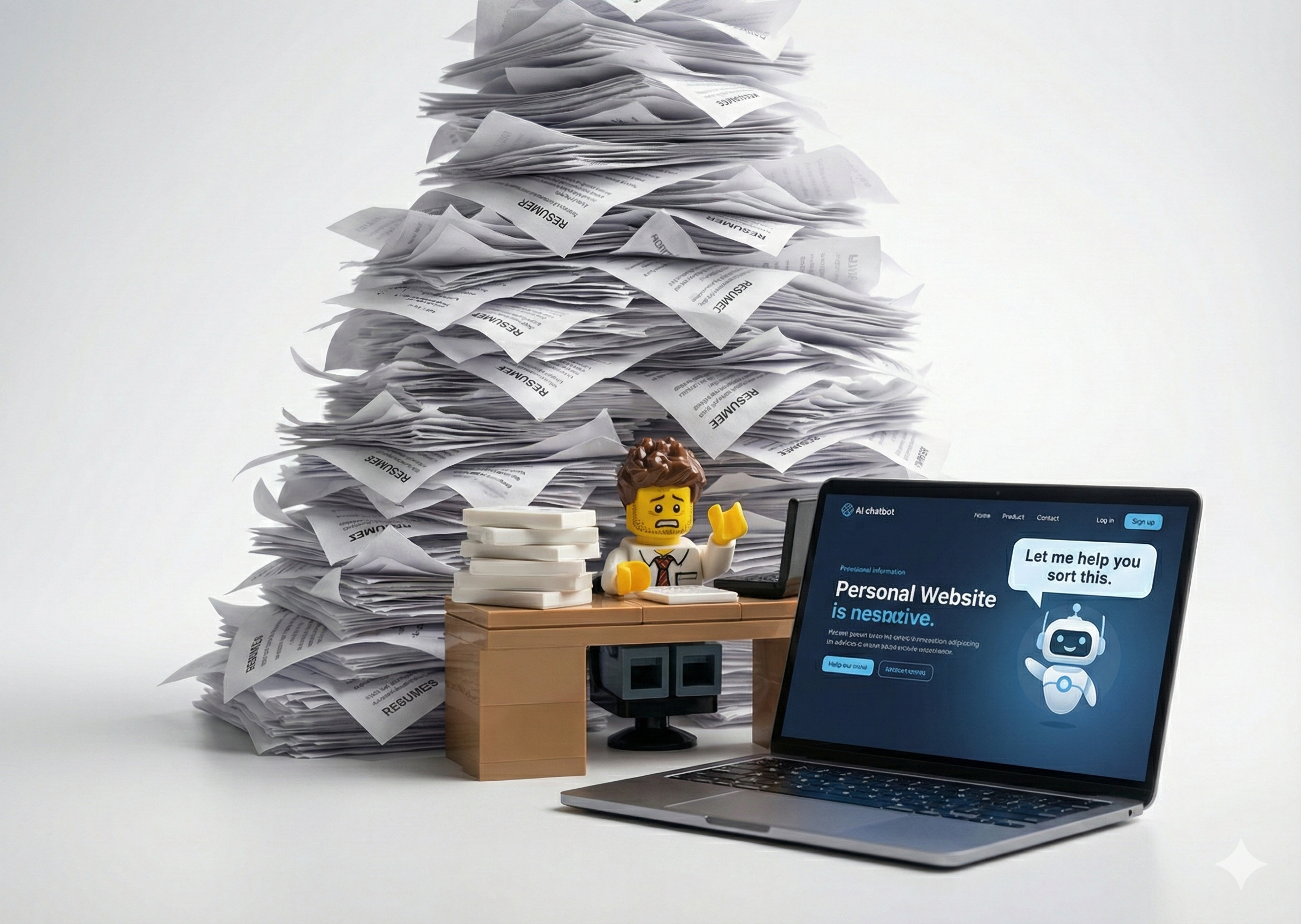
A recruiter gets hundreds or thousands of applications for a single opening. Your beautiful PDF? One of hundreds. They're not rejecting you because a robot hates your formatting. They're never getting to you because there's physically not enough time in the day to review everyone. Getting noticed in that pile isn't about keywords or formatting tricks. It's about standing out before you're even in the pile.
Yes, networking and personal connections are still the most reliable way to get your resume read. But not everyone has a warm introduction for every opportunity. This strategy helps when you don't.
Here's where it gets alarming: 47% of employers are less likely to interview candidates they can't find online. Nearly half. And 98% of employers conduct online background research on candidates. They're going to search for you. The question is what they'll find.
If you're invisible beyond a PDF, you're already behind.
The Website That Works When You're Asleep

I've been writing about building a personal website in an afternoon for nearly free. (If you haven't seen those posts, check out my website build guide - it walks through the whole process.) But the website itself isn't what makes the difference.
The real opportunity is adding an AI agent that acts as your proxy when you're not there.
Think about what happens with a traditional application. You submit a resume. Maybe you write a cover letter (which studies show barely anyone reads). Then you wait. You hope. You hear nothing. Getting ghosted by companies after submitting has become so normalized that we barely even talk about it anymore.
Now think about what happens when you have an AI agent on your site - or when you add your website into that often-skipped field on the job application. A recruiter finds you. They land on your site. They have questions. Your agent answers. At 2am. On a Saturday. While you're watching Netflix.
Jamie Kriegel and Stu Blank took me up on this. They built their sites. Added chatbots. Now any recruiter can ask questions that go beyond what fits on a PDF. "What's their leadership style?" "What projects have they led?" "How do they handle conflict?" Questions that would normally require a screening call - answered before the call even gets scheduled.
On my own site, there's a chatbot at triforceagility.com/experience. Ask it what I bring to an organization. Ask it about specific projects. Ask it about my perspective on estimation or team dynamics or AI enablement. It answers. 24/7. Whether I'm awake or not.
The data backs this up: 86% of employers will visit a website portfolio if you include it in your application. And 71% say website quality affects their hiring decision. They're not just glancing - they're evaluating.
Your website isn't just a portfolio. It's a conversation that happens without you.
The Fit Assessment: Your Secret Weapon
One feature I've built into my site (and others have replicated) is what I call a Strategic Fit Assessment.
The problem with applying to jobs is that fit is a two-way street, but the process is one-directional. You send in a resume. They evaluate you. But you don't get to ask them questions. You don't get to explain the nuance of why your experience - maybe from a different industry, maybe with a different title - actually maps perfectly to what they need.
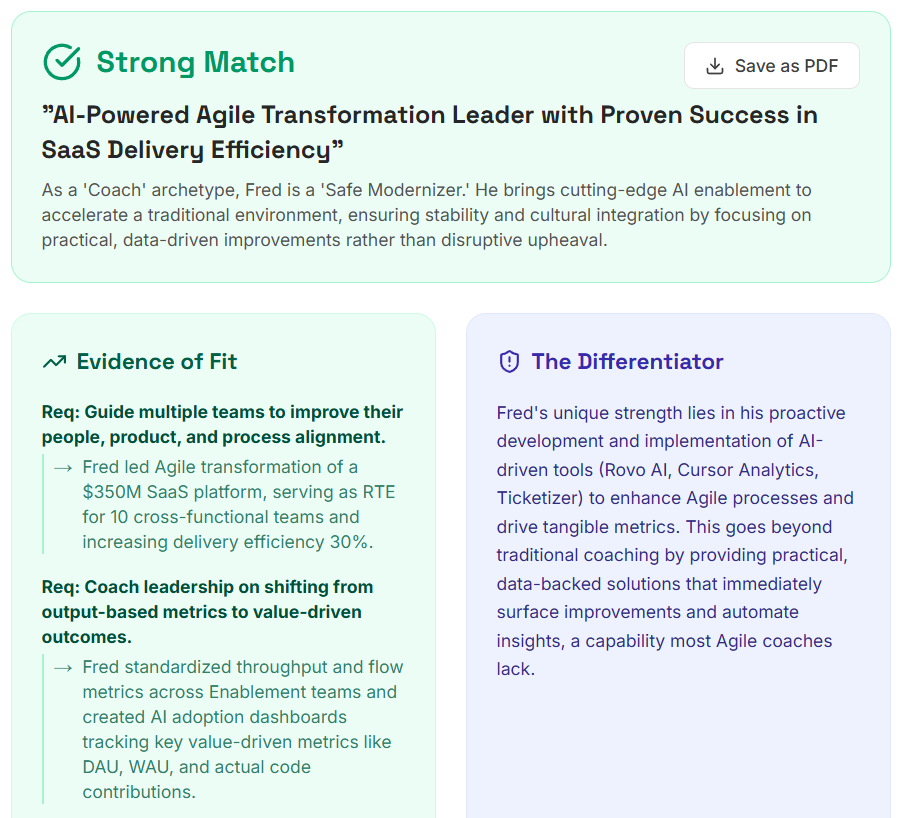
The Fit Assessment flips this. Here's what one looks like:
Evidence of Fit
Req: Lead engineering enablement initiatives that embed AI throughout the software development lifecycle.
→ Candidate led enterprise AI enablement, integrating Rovo AI workflows and coaching on SDLC practices, directly aligning with embedding AI across the development lifecycle.
Req: Partner with engineering leaders to standardize efficient workflows and internal toolchains.
→ Candidate standardized throughput and flow metrics across Platform teams and developed internal tools, demonstrating ability to create and implement standardized, efficient toolchains.
Req: Mentor and grow teams focused on internal developer productivity and delivery excellence.
→ Candidate coached 4 Scrum teams on Agile practices and created career growth paths that maintained engagement during uncertainty.
The Differentiator: This candidate is not just an Agile coach - they're a builder and implementer of AI-driven solutions. Their experience creating automated analytics and specialized internal tools demonstrates hands-on ability to enhance developer productivity.
That's not a resume. That's an argument. A document that says "here's exactly why I match what you're looking for" with specific mapping between requirements and experience.
Is it perfect? No. AI isn't magic. But what if it gets you one step closer? What if it takes you from getting ghosted to an actual conversation with a recruiter?
I recently heard back from someone who took my advice on this approach. A recruiter told them the Strategic Fit Analysis made the submission "much more straightforward" for the hiring team. It proactively addressed scope and technical depth that a standard resume would miss. And their blog content? It does an "excellent job of showcasing thinking beyond the resume."
That last part matters. Beyond the resume. That's the whole point.
The Cost Argument Is Dead
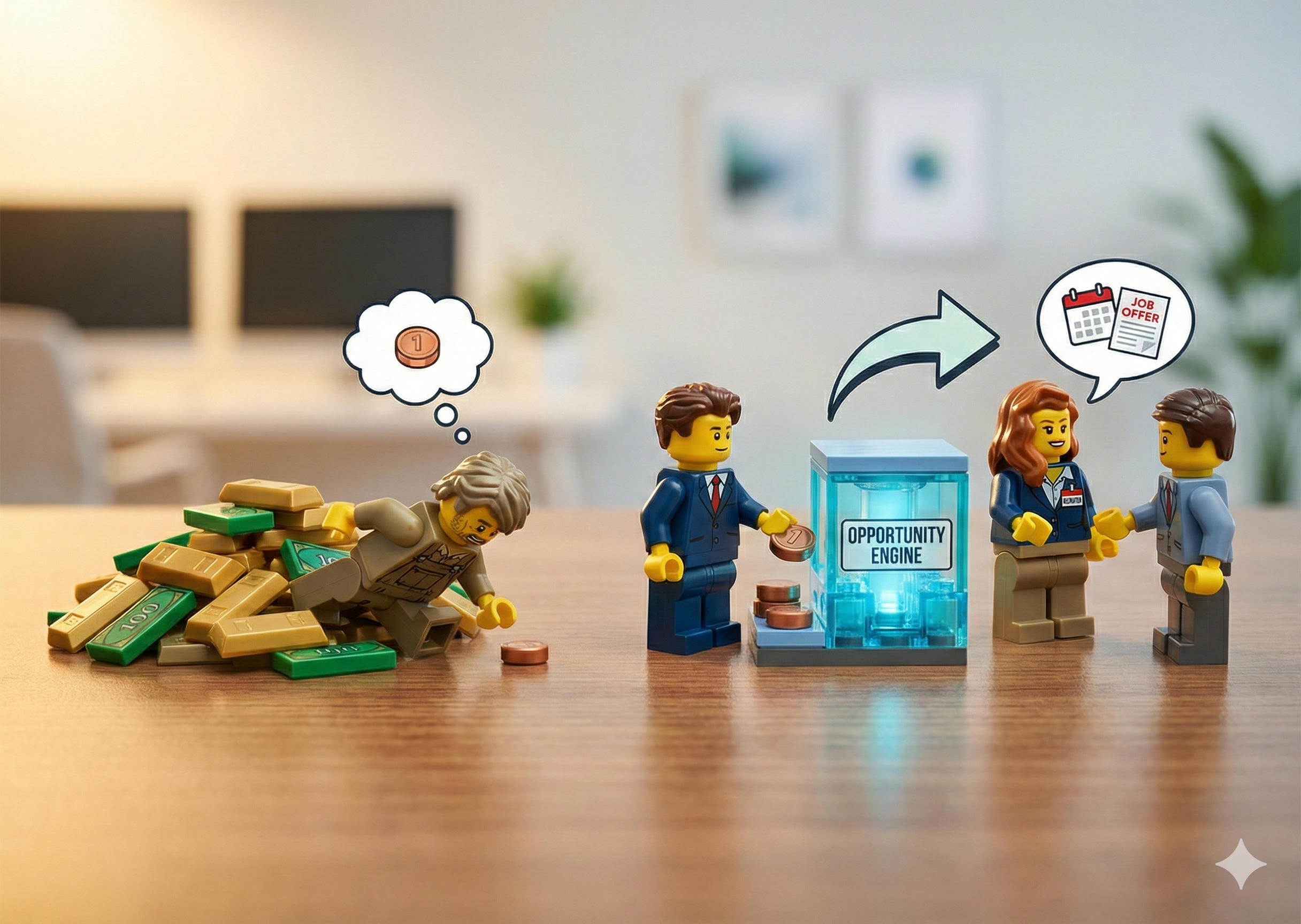
"But Fred, this must cost a fortune to run." I get this objection constantly. People assume AI is expensive because ChatGPT Plus is $20/month and enterprise tools cost thousands.
I'm running my fit assessment chatbot through OpenRouter with Gemini 2.5 Flash. The cost? Less than a penny per interaction. I've run dozens of conversations through it testing this.
Pennies. For a tool that works around the clock, answers questions you'd never be awake to answer, and helps hiring managers see past the resume to the human behind it.
There's an old saying about tripping over dollars to pick up pennies - people who nickel-and-dime small expenses while missing massive opportunities. This is the inverse. A few pennies that pay for themselves in opportunities you'd otherwise never see. One conversation with a recruiter that wouldn't have happened otherwise is worth more than a year of AI hosting costs.
So the cost isn't the barrier. The real question is whether this actually works.
The Real Differentiator
Let me give you the stat that should reframe how you think about this entire strategy:
70% of employers now consider personal brand more important than a resume or CV.
Not "just as important." More important.
Certifications are valuable. I'm not dunking on learning. I'm Scrum Alliance certified five times over, and I'm speaking at the upcoming Global Scrum Gathering in Vancouver (May 3-6). Certifications build knowledge. But certifications don't differentiate you in 2026. Everyone has them. The Scrum Alliance email I got? Thousands of people got the same one. We're all certified. We all have badges on LinkedIn.
What differentiates you is visible expertise - a presence that showcases how you think, not just what you know. A blog post that demonstrates your perspective. A chatbot that answers the questions a hiring manager is actually wondering about. A fit assessment that proactively addresses scope concerns before they become objections.
Your competitors are sending PDFs. You're sending a living, breathing representation of yourself that can answer questions, demonstrate fit, and showcase thinking they can't get from a bulleted list.
That's not a small advantage. That's a different game entirely.
Try This This Weekend (Or Next)
Okay, enough theory. Here's what y'all can actually do:
- Stand up a simple site. I have a full guide on building your website that walks through the whole process. More accessible than you think.
- Add an AI chatbot. My guide on adding AI to your website covers this step by step. The cost is negligible.
- Build a Fit Assessment. Let people compare themselves to roles without waiting for you to be awake or available. Give them the tool to make the case for you.
- Link to your thinking. Start a Substack. Write articles on LinkedIn. Share blog posts, case studies, perspectives. Show how you think, not just what you've done. That's what makes the difference.
- Update your applications. Every application you send should include a link to your site. Fill in that "personal website" field that most applicants skip entirely.